
Last updated September 20, 2026
Free on-site gate assessment - hinges, posts, and your LiftMaster or Nice gate operator checked before anything is quoted
The assessment is free and the quote is the invoice.
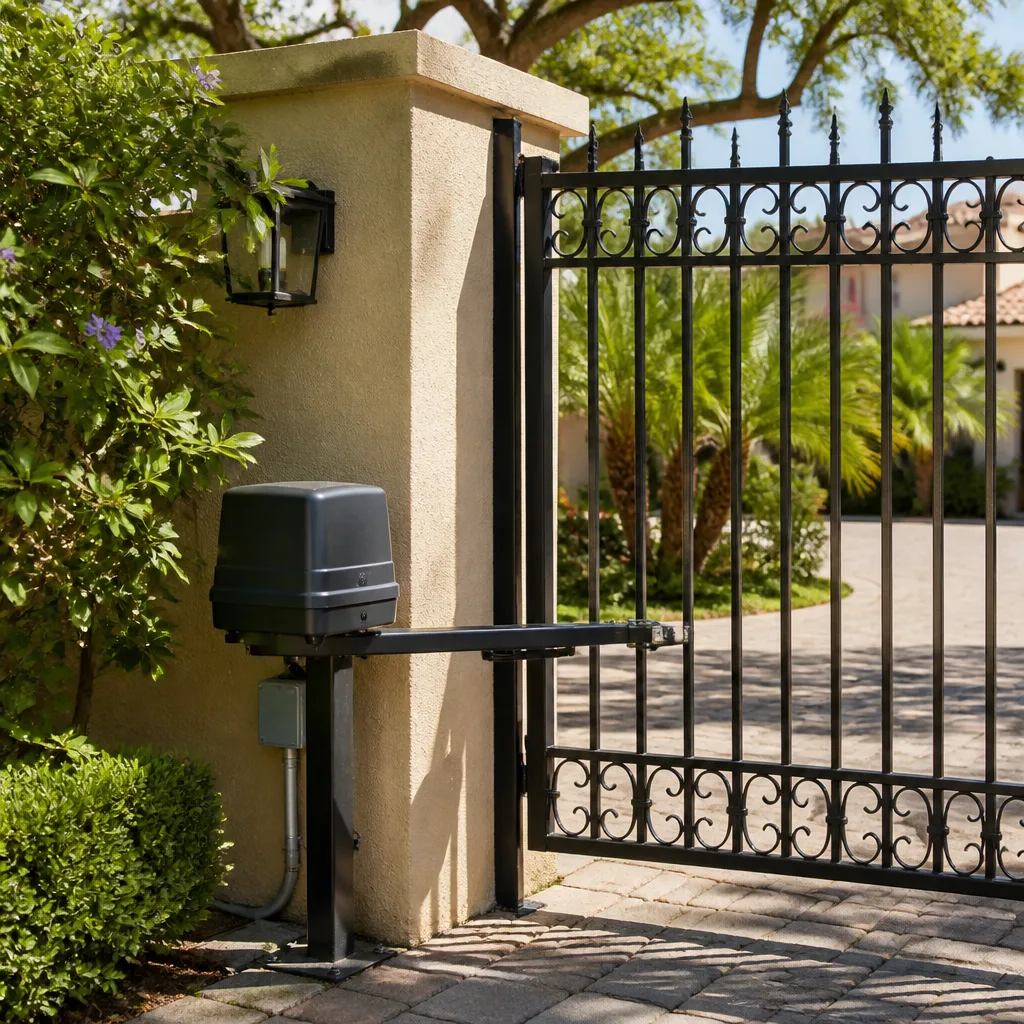
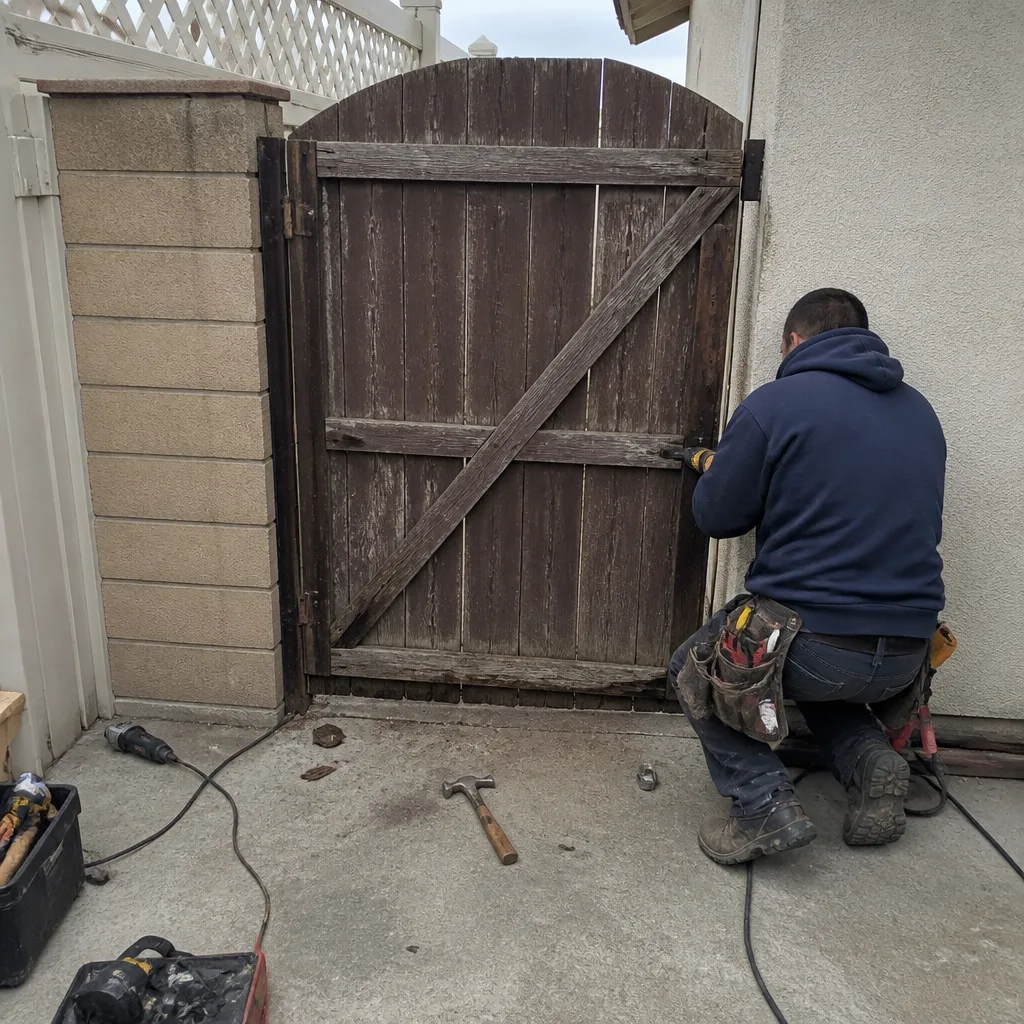 Before
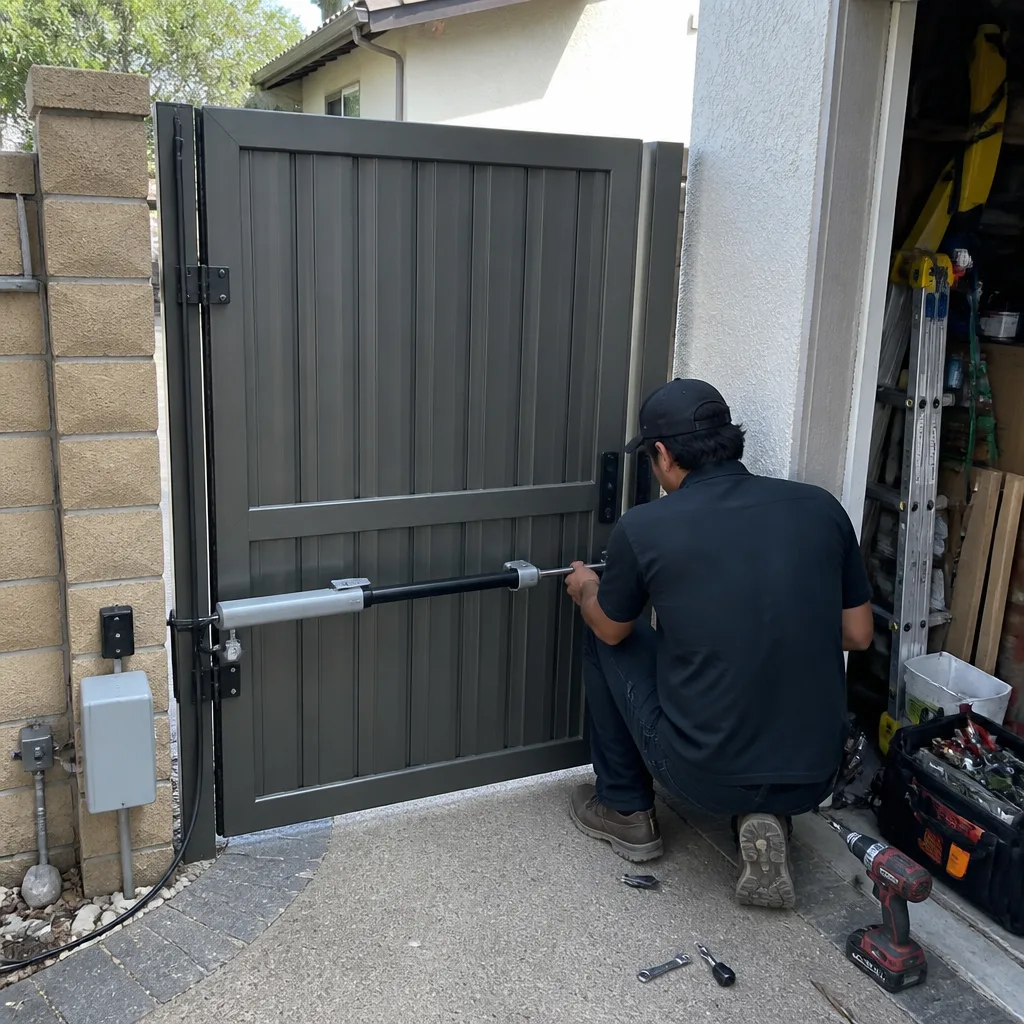 After
After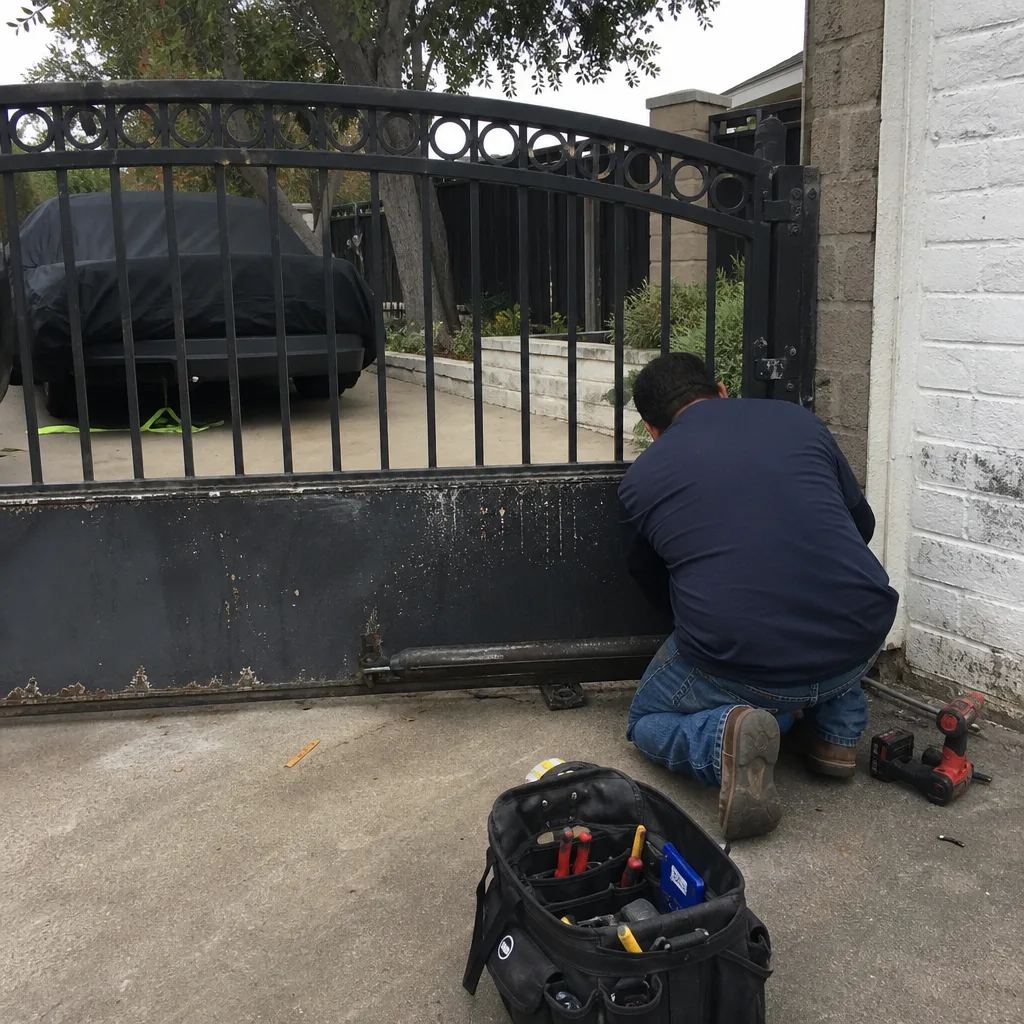 Before
 After
After Before
 After
AfterGate Repair Warning Signs: A Huntington Beach Homeowner’s Reference Guide
Most gate failures in Huntington Beach announce themselves weeks before they happen. The motor doesn’t just die on a Tuesday morning. It cycles slower, or reverses at the same spot, or makes a sound after rain that it didn’t make in September. The problem is that these warnings only mean something if you know what baseline to compare against. A gate that takes 19 seconds to open might be normal for a heavy iron driveway gate and a death rattle for a lightweight aluminum pedestrian gate. This guide translates what you’re seeing, hearing, and timing into specific failure hypotheses, so when you call a technician, you’re reporting evidence instead of vibes. You’ll also find more guides & resources on our blog. You’ll learn which symptoms are safe to watch for 30 days, which need same-week service, and which ones mean the gate is a safety hazard right now. If you own a gate anywhere from Edwards Hill to the wetlands, this is your field manual.
Quick Answer
Gate repair warning signs in Huntington Beach fall into three categories: mechanical symptoms you can time or measure (cycle time changes, grinding on one direction only), environmental symptoms specific to coastal air (terminal corrosion, photocell fogging, rust at weld points), and safety symptoms that require immediate professional attention (force limits too high, entrapment zone clearance loss, unexpected reversal). A gate that opens slower than it closes, reverses at the same position every cycle, or won’t respond on cold mornings is almost always giving you a specific diagnosis. Document what you observe with timestamps and photos, and you’ll cut diagnostic time in half when a technician arrives.
Table of Contents
- The Symptom-to-Cause Matrix: What Your Gate Is Actually Telling You
- Safe to Monitor vs. Service This Week: A Triage Framework
- Coastal-Specific Warning Signs in Huntington Beach
- How to Document and Timestamp Warning Signs Like a Technician
- Safety Hazards vs. Inconveniences: The Distinction That Matters
- What Specific Brands Do When They’re Failing: FAAC, BFT, Linear, Viking
- Common Mistakes to Avoid
- When to Call a Professional
- Frequently Asked Questions
- The Bottom Line
 Before
 After
AfterThe Symptom-to-Cause Matrix: What Your Gate Is Actually Telling You
A gate that reverses mid-cycle doesn’t have one cause. It has at least six, and the correct fix depends on details most homeowners don’t know to report: whether the reversal happens at the same position every time, whether it only occurs in direct sun, and whether it’s a full reverse or a partial hesitation. Here’s what each specific behavior suggests.
Reverses at the Same Position Every Time
This is almost never the motor. When a gate reverses at a consistent point in its travel, the first suspects are mechanical obstruction or limit switch calibration. We’ve seen Huntington Beach properties where a settling concrete driveway pad shifted a gate post by half an inch, and that half inch was enough for the gate edge to catch on a high spot at the exact same position every cycle. The gate’s safety system reads that resistance as an obstruction and reverses. Other consistent-position reversal causes include a bent track on slide gates, a hinge that’s seized enough to bind at a specific angle, or a limit switch that was set incorrectly during the last service visit. The key detail: if the reversal point is identical every time, the gate is hitting something or reading something. If the reversal point moves around, the cause is different.
Reverses Only in Direct Sun
Huntington Beach gets roughly 280 sunny days a year, and photo-eye false trips in direct sunlight are common enough that we keep a record of which streets see it most. A photo-eye (the infrared beam that stops the gate when something breaks the beam) can be flooded by direct sunlight hitting the receiver lens. The receiver mistakes the sun’s infrared component for its own beam reflection and reads “obstruction.” If your gate reverses only between certain hours, typically mid-morning or late afternoon when the sun angle aligns with the beam path, watch for that pattern. The fix is often as simple as shading the receiver or swapping to a model with better sunlight filtering, but the diagnostic detail that matters is the time of day. Write it down.
Won’t Open on Cold Mornings
Cold-morning failure points to the motor capacitor or a battery in a solar or backup system. A capacitor that’s nearing end of life loses its ability to deliver the starting torque the motor needs when temperatures drop and lubricants thicken. By 10 a.m., after the sun has warmed things up, the gate works fine, and the capacitor limps along for weeks or months. In Huntington Beach, winter lows in the 40s are enough to expose a weak capacitor, especially for gates that haven’t been serviced in years. The same cold-start behavior appears on battery-backed systems where a battery with reduced capacity can’t deliver voltage under load when cold. If the gate is sluggish or unresponsive only when cold, that’s a starting-system problem, not a motor failure.
Grinds on Close but Not Open
Direction-specific noise is a powerful diagnostic. A gate that grinds on close but opens quietly usually has wear concentrated on one side of the gear train or one load-bearing surface. Think about it: when a slide gate closes, the rack teeth engage the pinion gear in one direction, and the load sits on one face of each tooth. Opening reverses the load. If the grinding only happens on close, the likely causes are a rack and pinion with uneven wear, a hinge on a swing gate that’s fine under tension but grinds under compression, or a chain that’s loose enough to drag only when pulled one way. The important takeaway is that this symptom localizes the problem to a mechanical wear point, and it’s worth photographing the rack and hinge hardware before calling for service.
Opens Slower Than It Closes
A swing gate that opens slower than it closes is often fighting a failing capacitor, low voltage at the motor, or a partially seized hinge that resists more when the gate has to push against the wind. Coastal wind in Huntington Beach is a factor: a west-facing gate near the beach pushes into afternoon sea breeze on open, and the extra aerodynamic load combined with a weak capacitor makes the speed difference obvious. A slide gate that opens slower than it closes suggests a chain or belt tension issue or debris accumulation in the track on the open side. If you time your gate’s open cycle against its close cycle and see more than a 3-second difference on a gate that used to be symmetric, that’s a real finding. Timing it is the only way to know.
For a full breakdown of what gate repair costs in this market, see our Gate Repair in Huntington Beach page.
Safe to Monitor vs. Service This Week: A Triage Framework
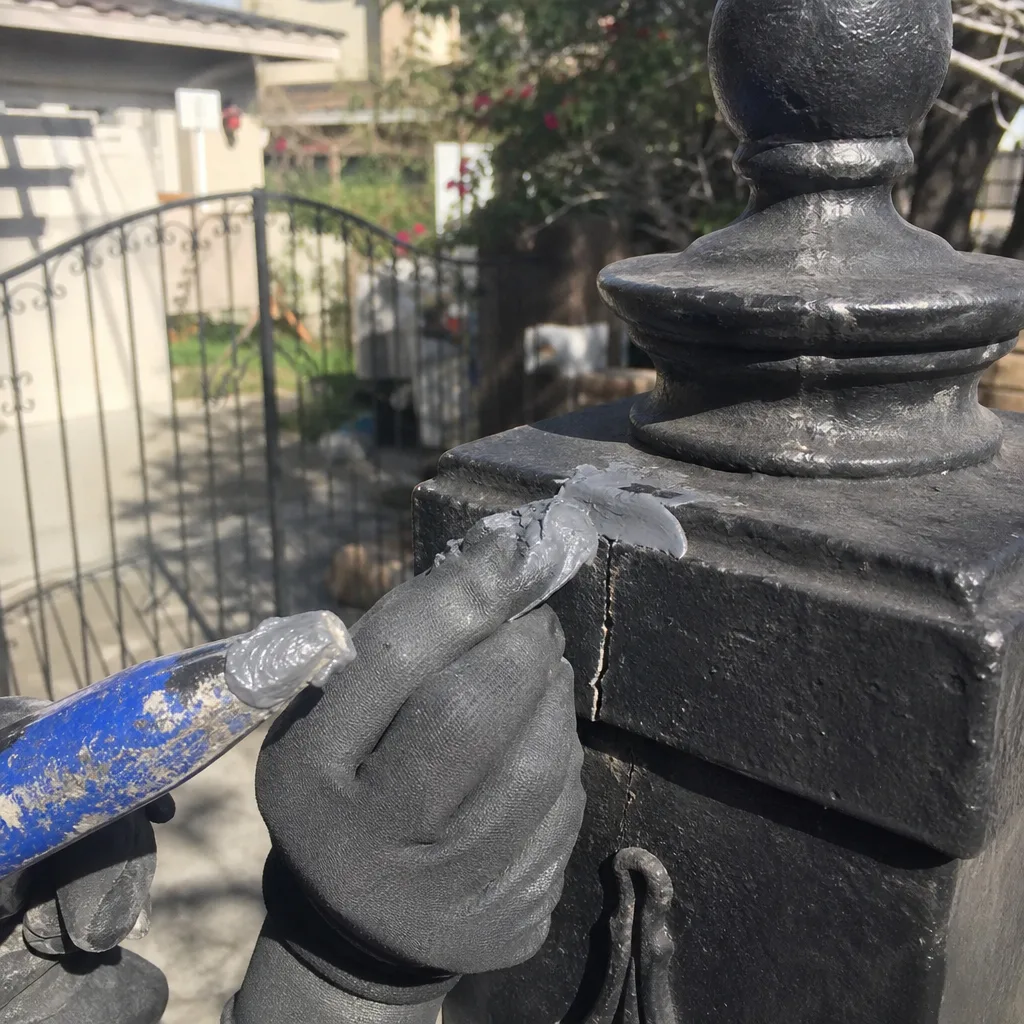
Not every warning sign is an emergency. Some can wait 30 days while you document the behavior. Others need a technician this week before a minor repair becomes a gate that won’t move and a car trapped in the driveway. Here’s the triage framework we use with homeowners who call us from Huntington Beach neighborhoods wondering how urgent their problem is.
Safe to Monitor for Up to 30 Days
- Slightly slower cycle time (under 15% change): If your gate went from 14 seconds to 15.5 seconds, and there’s no grinding or reversal, document it for two weeks. Watch for progression.
- Occasional photo-eye misalignment after wind: A beam that trips once a week and resets easily is annoying but not dangerous. Note the weather conditions when it happens.
- Light surface rust on non-structural hardware: Surface rust on hinge pins or brackets in a coastal environment is normal. It’s worth cleaning and treating during your next service, not an emergency.
- Intermittent remote range reduction: If the remote works from 60 feet on most days but occasionally only from 20 feet, it could be battery, weather, or interference. Replace the remote battery first, then monitor.
Service This Week
- Any grinding, squealing, or metal-on-metal sound: Audible grinding means something is wearing out while you listen. Every cycle removes material.
- Cycle time increased by more than 20%: A gate that went from 14 seconds to 17 seconds without any programming change is working harder against something. That something will win.
- Reversal or stoppage at random positions: This suggests an intermittent fault in wiring, a failing control board, or a photo-eye problem that’s not consistent enough to diagnose without equipment. The risk is the gate stopping while you’re halfway through the opening.
- Motor hums but gate doesn’t move: A humming motor with no movement is either a seized gearbox or a capacitor that finally gave out. Both worsen with each attempt to cycle the gate.
- Any visible spark, smoke smell, or tripped breaker associated with the gate: Electrical faults don’t self-heal. This is a stop-using-the-gate situation.
Coastal-Specific Warning Signs in Huntington Beach
Huntington Beach air carries salt, and salt accelerates electrical and mechanical failures in ways that inland homeowners never see. If you live within two miles of Pacific Coast Highway, expect your gate hardware to age faster than the same equipment in Fountain Valley or Westminster. Here are the coastal warning signs specific to this area.
White Crystalline Residue on Terminals and Connections
That white powder forming on battery terminals, control board connectors, and wire junctions is salt corrosion. In Huntington Beach, it forms faster because the marine layer pushes salt-laden air inland every night. Salt residue conducts electricity where it shouldn’t and insulates where it should. Left unaddressed, it migrates into connectors and creates high-resistance points that generate heat, which accelerates corrosion further. If you see white residue on any exposed gate electrical component, that’s a warning sign that your system is in an accelerated corrosion environment. The fix is cleaning with a proper electrical contact cleaner and applying dielectric grease to protect the connection going forward.
Photocell Lens Fogging
Photo-eye lenses on Huntington Beach gates develop a film that inland lenses don’t. It’s a combination of salt accumulation and moisture cycling from the daily marine layer. A fogged lens diffuses the infrared beam enough that the receiver sees a variable signal, and the gate behaves erratically: reversing sometimes, pausing other times, usually when you’re in a hurry. If your gate’s photo-eyes look cloudy or have a visible film, cleaning them with a dry microfiber cloth and checking alignment is a 10-minute job that solves a surprising number of intermittent reversal complaints.
Unusual Motor Sounds After Rain
Rain in Huntington Beach is seasonal, and the first rain after a dry stretch exposes gate problems that were dormant. Water finds its way into motor housings through degraded seals, into limit switch enclosures through hairline cracks, and into underground conduit that’s been settling. If your gate motor makes a different sound after rain, a grinding or hissing or anything that wasn’t there before the storm, that’s water interacting with something electrical or mechanical. It may dry out and sound fine in a week. It may also corrode a bearing or short a connection. After-rain sounds are a service-this-week signal, not a monitor-it signal.
Accelerated Rust at Weld Points and Gate Hardware
Welds are the most corrosion-prone points on any steel gate because the welding process changes the metal’s grain structure and removes protective coatings. In salt air, weld points rust first, and the rust expands, stressing the joint from inside. On a Huntington Beach gate, a rusted weld that looks cosmetic can be structurally compromised underneath. If you see rust blooming at weld points, especially at hinge connections or where pickets meet rails, have someone assess it before it becomes a structural failure.
How to Document and Timestamp Warning Signs Like a Technician
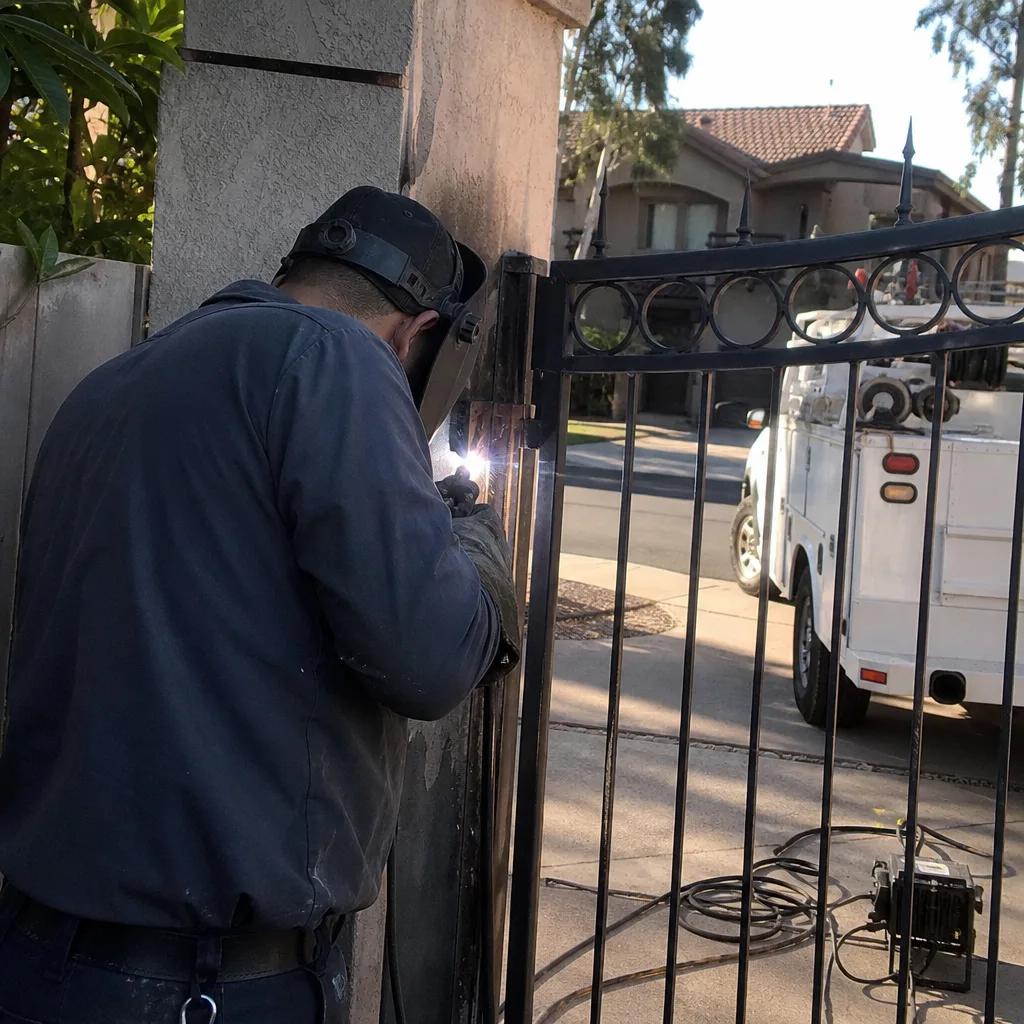
The difference between a 20-minute diagnosis and a two-hour one is often the quality of information the homeowner provides before the technician arrives. When we dispatch to a Huntington Beach property, the most helpful calls include specific observations: what the gate did, when it did it, how often, and under what conditions. Here’s the documentation routine that turns a vague complaint into an actionable service record.
- Time the cycle. Use your phone’s stopwatch. Open the gate and record the time. Close it and record the time. Do this three times over a week. If your gate used to open in 14 seconds and now takes 19, you have a 35% increase. That number means something.
- Note the reversal position precisely. If the gate reverses, film it with your phone. Watch where the gate edge is when the reversal happens: halfway, three-quarters, always at the same picket. Even a rough measurement helps.
- Record the conditions. Temperature, time of day, direct sun or shade, after rain, windy, marine layer present. Many gate behaviors are environmental, and denying the technician that context means he or she has to guess.
- Photograph the motor and control board area. Before calling for service, open the motor housing (if you can safely do so without touching wiring) and take clear photos of the control board, any visible corrosion, and the motor nameplate showing brand and model. Send these with your service request.
- Keep a simple log. A note on your phone works. “Tuesday 7:15 a.m., gate wouldn’t open, waited 10 seconds, tried again, opened slow. Wednesday 7:20 a.m., same thing.” Three mornings of data beats a single observation.
This documentation habit is the homeowner equivalent of what Vance Gate Repair Huntington Beach home technicians do on every visit. We photograph what we find, what we adjust, and what we install, and we leave that record with you. The same logic applies to your pre-service observation: evidence first, opinion second.
Safety Hazards vs. Inconveniences: The Distinction That Matters
Most gate warning signs fall into two buckets: inconvenient and dangerous. The distinction isn’t about how annoying the symptom is. A gate that won’t close is an inconvenience. A gate that closes too hard or doesn’t stop when it hits something is a safety hazard. Here’s how to tell the difference.
Inconvenience Symptoms
Slow operation, reduces remote range, a photo-eye that occasionally needs realignment, a limit switch that requires the gate to be cycled twice, cosmetic rust. These are problems worth fixing, and they often become more expensive when ignored, but they don’t pose an immediate risk to people or property.
Safety Hazard Symptoms
A gate that does not reverse when it contacts an obstacle is a safety hazard, period. UL 325 entrapment protection standards exist because gates have killed people, and a gate with non-functioning reversing sensors or force limits set too high is capable of crushing a child or pet. If your gate closes against resistance and keeps pressing, stop using the automatic function and disconnect the operator until a technician evaluates it. Another hazard: a gate that closes faster than it used to, which often means a mechanical failure that removed resistance, such as a broken chain on a slide gate allowing the gate to roll freely. A free-rolling gate can build momentum. Any unexpected fast movement of a gate is a hazard, not an annoyance.
The Force Limit Problem
Many gate operators have adjustable force settings. When a gate starts binding slightly, a previous technician or homeowner may have “fixed” the symptom by raising the force limit so the gate pushes through resistance. That adjustment masks the underlying problem and increases entrapment risk. If you or someone else raised the force setting to keep the gate moving, the gate now has a mechanical problem AND a safety problem. The correct fix is to find and repair the binding, then set the force limit back to the minimum that reliably moves the gate through its full travel.
If you’re considering a new gate rather than repairing the existing one, our Gate Installation in Huntington Beach page covers what a proper installation includes and what it should cost.
What Specific Brands Do When They’re Failing: FAAC, BFT, Linear, Viking
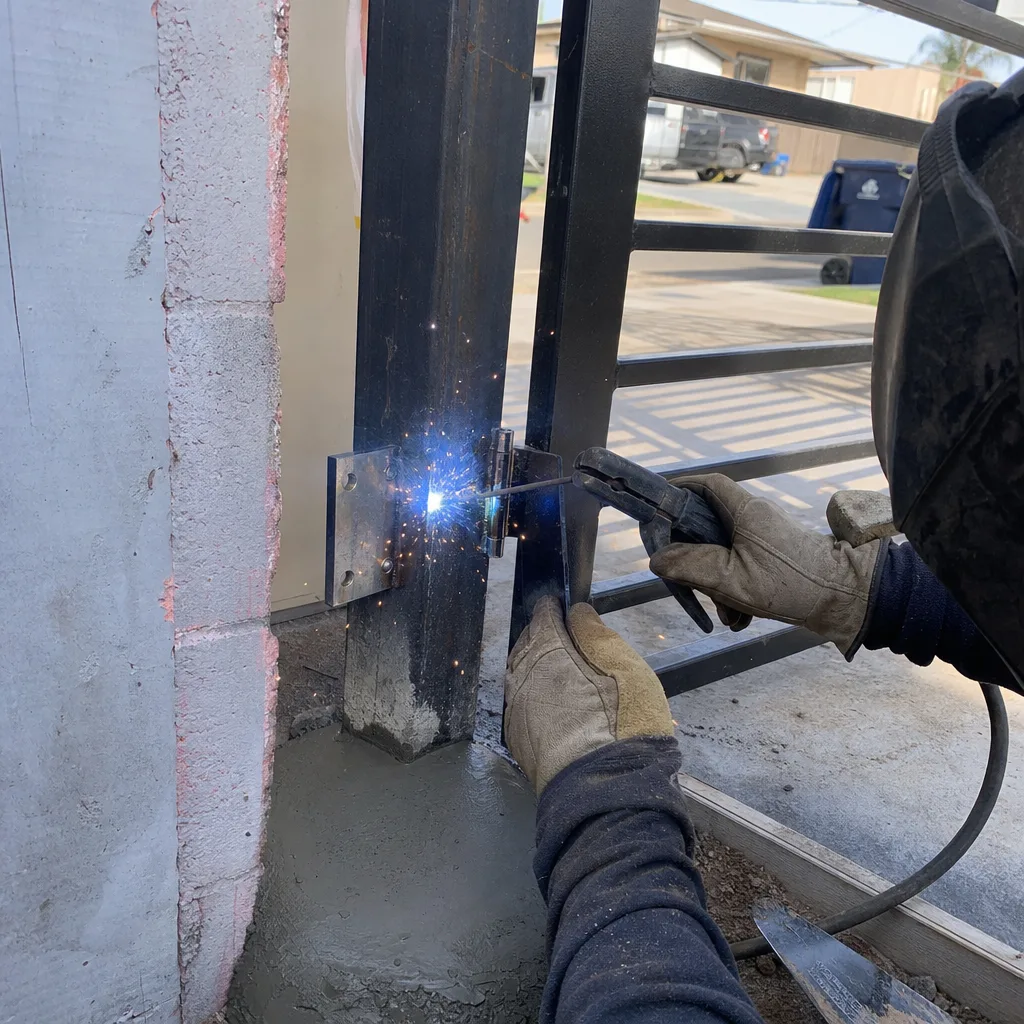
After 22,000 gate repairs since 2014, we’ve learned that different automation brands fail in characteristic ways. This isn’t a brand comparison; it’s field observation. If your gate is running one of these operators, here’s what to watch for.
FAAC
FAAC hydraulic operators are common on higher-end Huntington Beach swing gates, and their failure patterns tend to be hydraulic rather than electronic. Watch for oil seepage around the cylinder seals, which shows up as a dark stain on the operator body or the mounting pad. A FAAC system that’s low on hydraulic fluid becomes slow or stalls mid-cycle, especially when cold. The motor runs fine, but the piston doesn’t move fluid properly. Another FAAC-specific warning: a soft “thud” when the gate reaches full open or close, which suggests the internal limit is no longer cushioning the end of travel.
BFT
BFT operators on Huntington Beach properties often serve slide gates in newer subdivisions. The characteristic BFT failure mode we see is control board capacitor degeneration, which manifests as intermittent no-response: the gate works fine for three days, then ignores the remote for an hour, then works again. The capacitors on the board dry out over time, and the board becomes erratic. This is a harder diagnosis because the gate usually works when the technician arrives. Time-stamped video of the gate not responding goes a long way here.
Linear
Linear systems are workhorses, and their failure mode tends to be mechanical wear in the actuator arm or chain drive on slide gates. Listen for a rhythmic click or thunk on a Linear slide gate as the chain passes over the sprocket. A stretched chain will ride up on the sprocket teeth and drop down, creating a periodic sound that matches gate position. If you count the clicks per cycle, you can sometimes tell a technician the approximate position of the wear point without ever touching the gate.
Viking
Viking operators are less common in Huntington Beach but appear on some custom gates. The Viking-specific failure we track is limit switch drift, where the switch physically moves over time due to vibration. A Viking gate that starts stopping short of full open, then later overtravels, then stops short again, is likely a limit switch that’s shifted in its mount. The symptom changes cycle to cycle, which distinguishes it from a control board problem.
If your gate motor or opener is making these sounds or behaving in these patterns, our Gate Motor & Opener in Huntington Beach page explains what service involves and what to expect on pricing.
Common Mistakes to Avoid
- Raising the force limit to “fix” a binding gate. This converts a mechanical problem into a safety hazard. If the gate binds, the binding is the problem. Raising force so it pushes through masks the symptom until the mechanism fails completely or someone gets hurt.
- Lubricating a grinding sound without identifying the wear point. Spraying lubricant on a rack and pinion that’s already worn quiets the symptom for a week and accelerates the wear by trapping dirt. Grinding means a part is worn; lubricant doesn’t restore metal.
- Ignoring a slow-but-consistent cycle because “it still opens.” A gate that opens slower than it did is working harder than it should. Motors are rated for a specific load at a specific speed, and prolonged high-load operation shortens their life. The slow cycle is the early warning, not the problem itself.
- Replacing the remote battery and calling it done when the real problem is the receiver. If new remote batteries don’t restore range, the receiver or its antenna is failing. Multiple remote batteries replaced within a year is a pattern worth investigating.
- Power-washing the gate and motor area without protecting electrical components. Huntington Beach homeowners pressure-wash everything, including gates. Water forced into motor housings and control boxes causes failures that show up weeks later. If you power wash, cover or avoid the operator area.
- Assuming a gate that works “fine” after rain is fine. Intermittent electrical faults that appear and disappear with moisture are the hardest to diagnose and the most likely to fail when you need the gate most. Document the symptom and get it checked even if it goes away.
- Waiting until the gate stops moving to call. Every warning sign in this guide is cheaper to address before the gate fails completely. A capacitor replacement is cheaper than a motor replacement. A hinge adjustment is cheaper than a post repair. The gate that gives you two weeks of warning and gets ignored will eventually give you a day of no warning and a bill for the worst-case repair.
When to Call a Professional
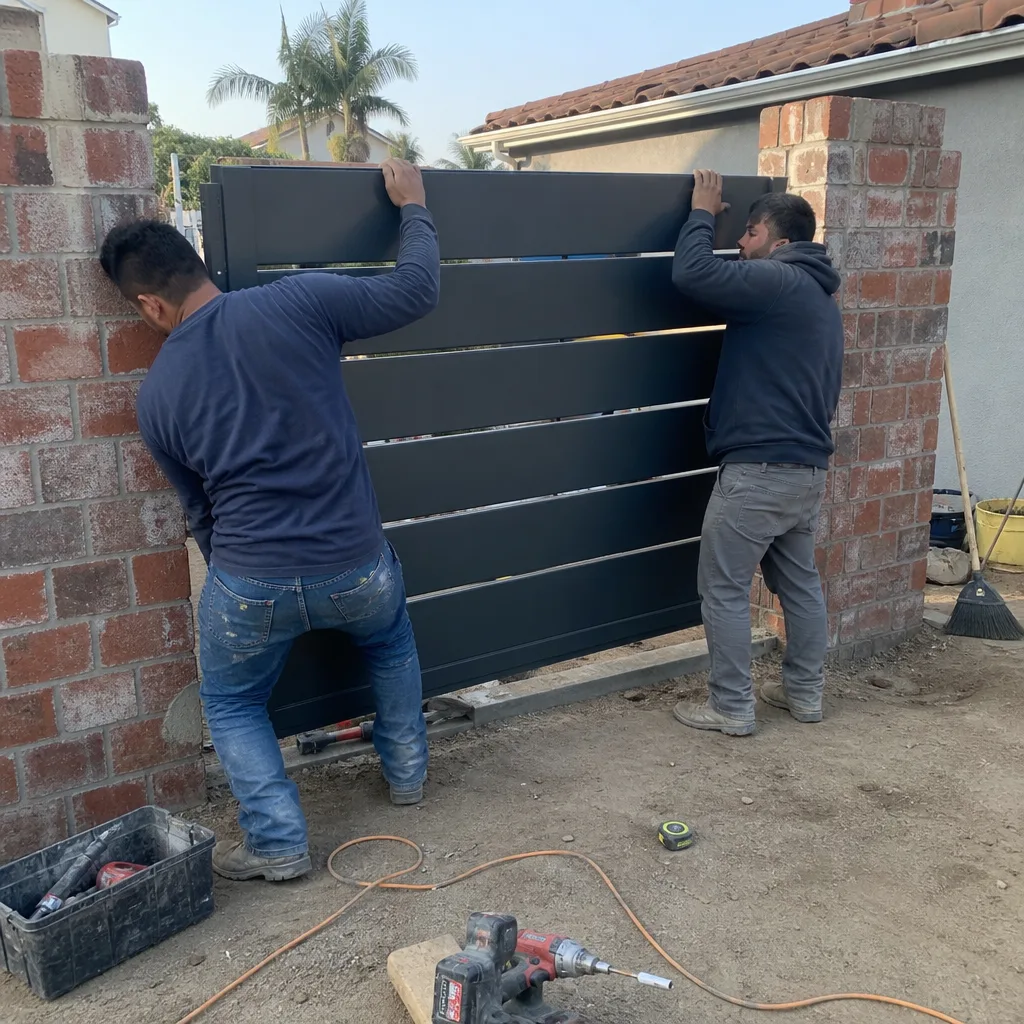
Call a gate professional when the symptom involves the operator, the electrical system, or any safety function. That means: the gate reverses unexpectedly, the motor hums without moving, the force limit has been adjusted from its original setting, any safety device (photo-eye, edge sensor, reversing mechanism) is malfunctioning, or you’ve observed the symptom twice and can describe it specifically. If the gate is making a new sound, grinding, or cycling measurably slower, you’re better off with a trained eye before the repair bill grows. Huntington Beach’s salt air means a small corrosion issue becomes a large one faster than inland homeowners expect. Gate Repair services from Vance Gate Repair Huntington Beach include free estimates in Huntington Beach, call (657) 271-2877. We’ll give you a written price before any work starts, and a documented photo record when the technician leaves.
Frequently Asked Questions
Most gate repairs in Huntington Beach run between $180 and $650 depending on the component. A photo-eye realignment or limit switch reset sits at the low end. A capacitor replacement, hinge repair, or control board replacement runs higher. A full operator replacement on a swing gate typically runs $800 to $1,800 installed, depending on brand and whether the arm bracket is intact. The exact price depends on what’s actually wrong, which is why we diagnose first and write down the price before any work starts. Call (657) 271-2877 for a free estimate.
Random reversal usually means one of three things: a photo-eye that’s intermittently misaligned or fogged from salt air, a control board with a failing component that occasionally misreads sensor input, or an obstruction in the gate path that’s only present sometimes. If the reversal happens at the same position every time, it’s a physical obstruction or limit switch issue. If it’s random, the photo-eye and control board are the primary suspects. Film it with your phone and call us.
A live person answers our phone 24 hours a day, seven days a week, and we dispatch repair technicians to Huntington Beach every day. Emergency repairs, where the gate is stuck open, stuck closed, or presenting a safety hazard, take priority in the dispatch queue. Call (657) 271-2877 and describe what the gate is doing.
A full installation includes the gate itself, posts, hinges or track, the operator or motor, safety devices (photo-eyes, edge sensors where required), control wiring, and setup of any remotes or keypads. On a Huntington Beach property, the installation also needs to account for salt-air corrosion protection on hardware and proper sealing of electrical connections. We provide a written scope of work and a written price before the job starts.
Yes. The electrical run from the house to the gate, including conduit and proper wire sizing, is part of the installation or repair scope. Safety edges, the pressure-sensitive strips that stop the gate when something contacts the edge, are installed and calibrated as part of any automatic gate project. We photograph the wiring and the final settings before we leave.
Technically, a gate can be programmed to operate without photo-eyes, but it should not be. UL 325 entrapment protection standards require a monitored entrapment protection device, and disabling or bypassing the photo-eyes on an automatic gate creates a serious safety hazard. This is not a corner we recommend cutting and not a modification we’ll make. If your photo-eyes are failing, replacement is straightforward and cheaper than the liability of running without them.
The Bottom Line
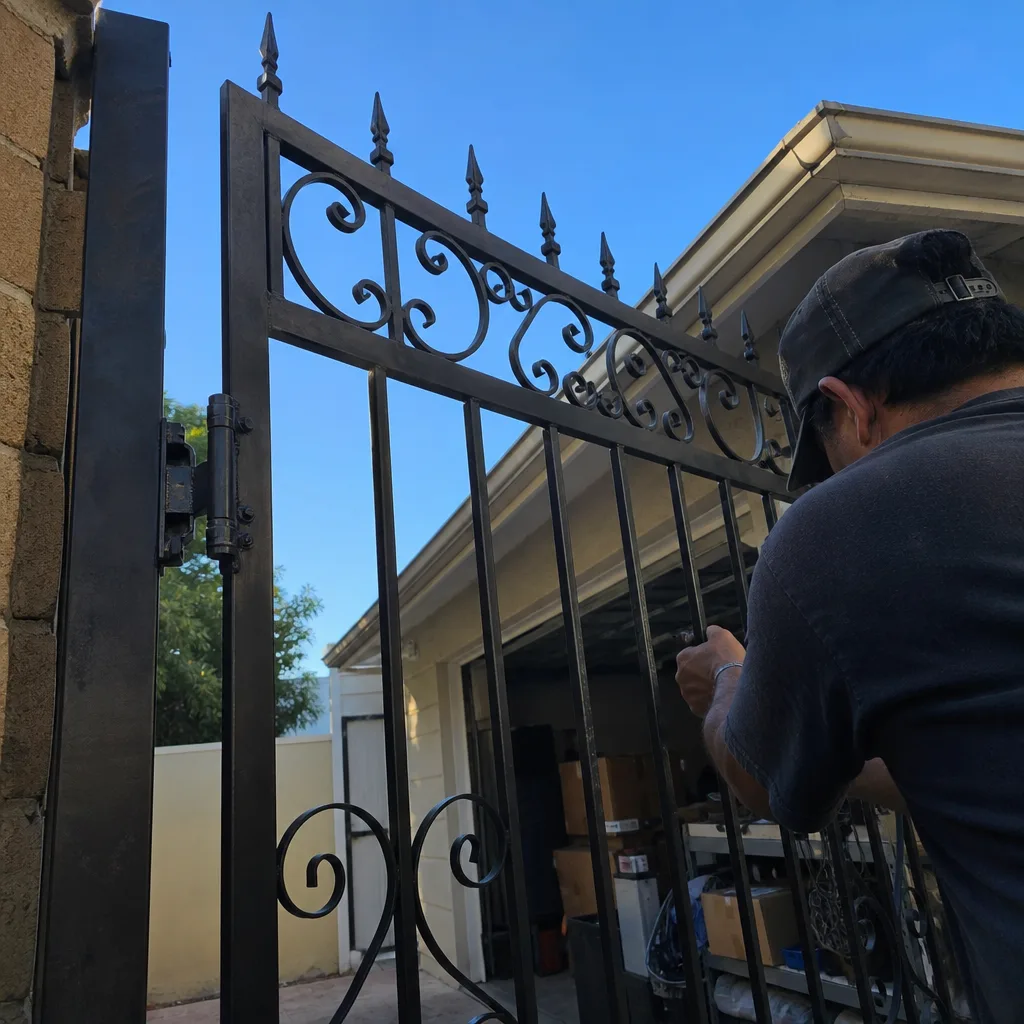
Gate warning signs are a language. The gate tells you what’s wrong weeks before it stops working, but only if you’re listening for specifics: timing changes, position-specific reversals, sounds that only happen after rain, corrosion patterns on terminals. Huntington Beach’s coastal environment accelerates every failure mode, which means the observation window is shorter here than inland. Document what you see, time what you can, photograph what’s accessible, and call a professional when the symptom involves safety or the electrical system rather than waiting for total failure. A written record of your observations is the most valuable thing you can hand a technician, and at Vance Gate Repair, that’s the way we work on every job, a written price before we start and a photo record when we leave. For additional help, see our How to Hire a Gate Repair Contractor in Huntington Beach: A Step-by-Step Guide.
Need a second opinion on a written estimate from another company? Bring the paperwork and we’ll review it at no cost. Call (657) 271-2877 to schedule service in Huntington Beach.
Written by Adrian Vance, Owner at Vance Gate Repair Huntington Beach, serving Huntington Beach since 2014.