
Last updated September 20, 2026
Free on-site gate assessment - hinges, posts, and your LiftMaster or Nice gate operator checked before anything is quoted
The assessment is free and the quote is the invoice.

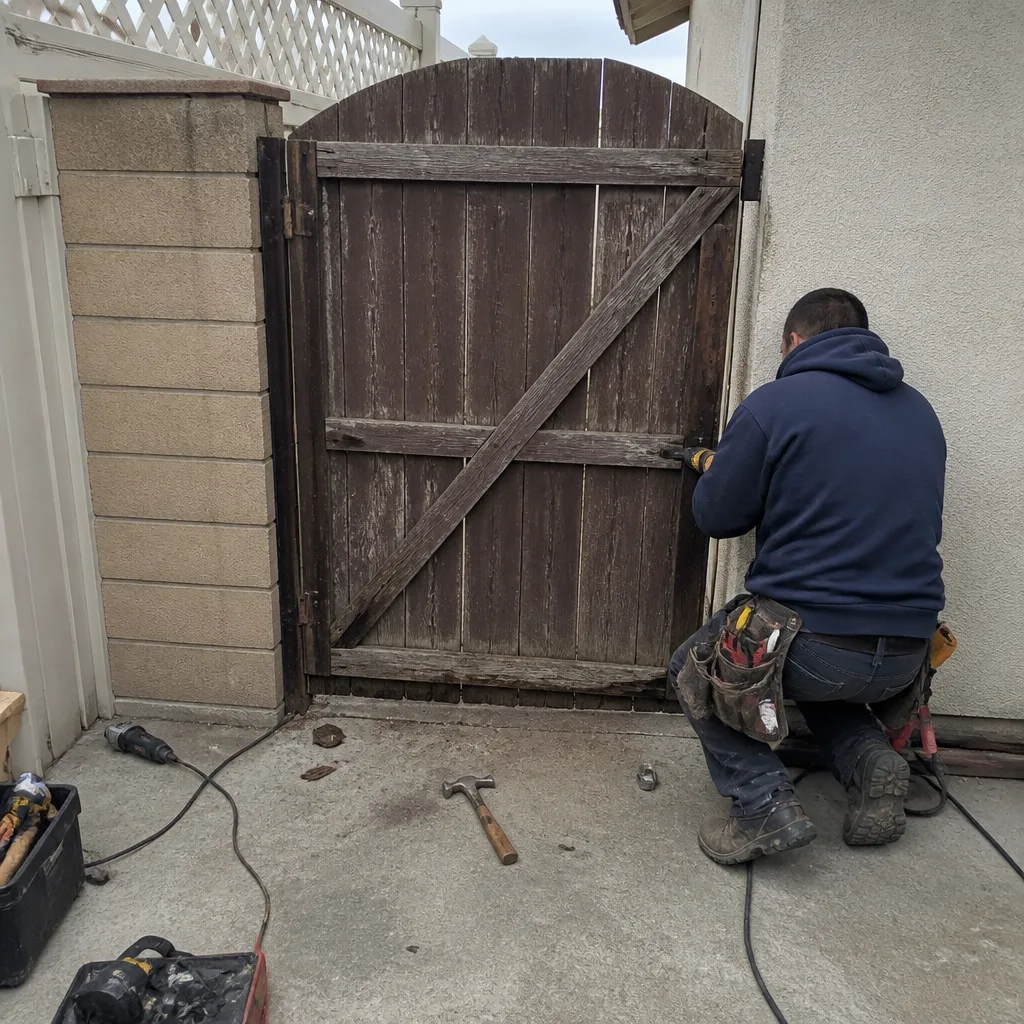 Before
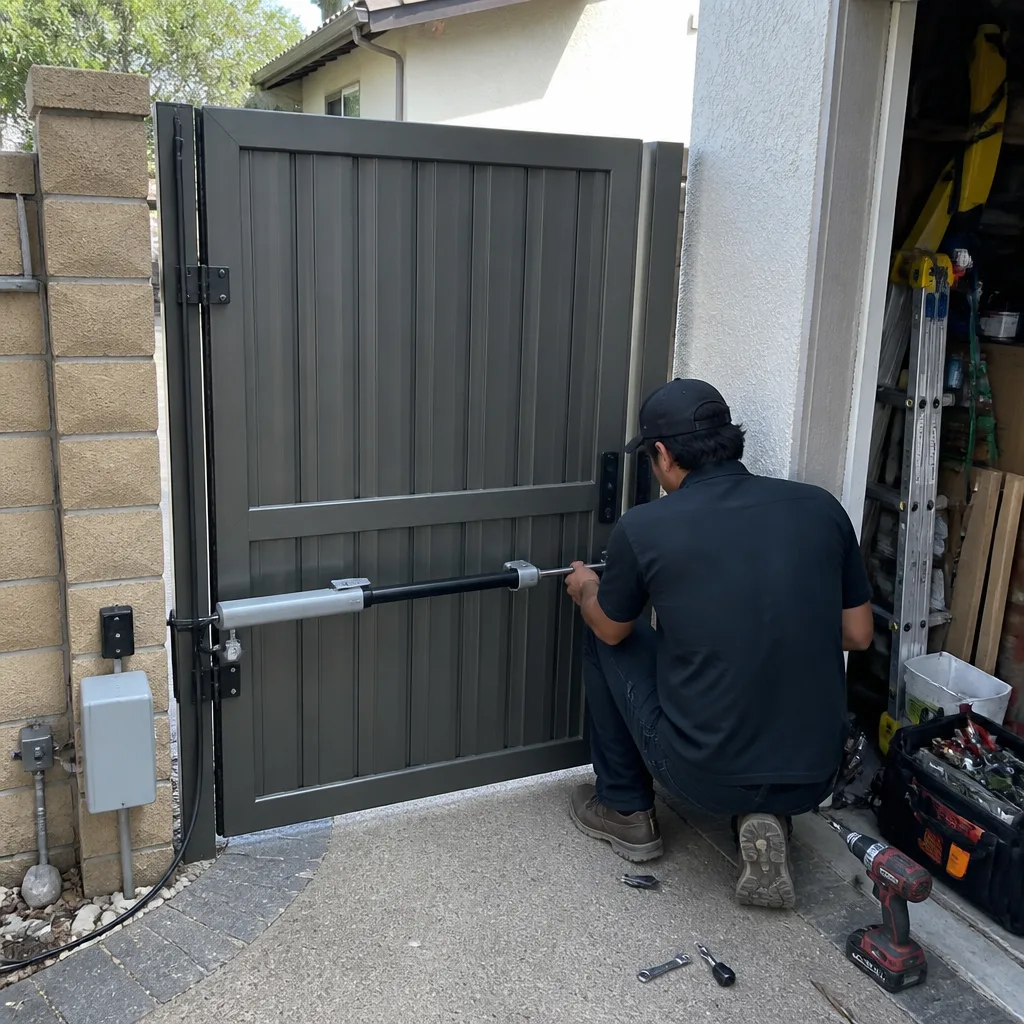 After
After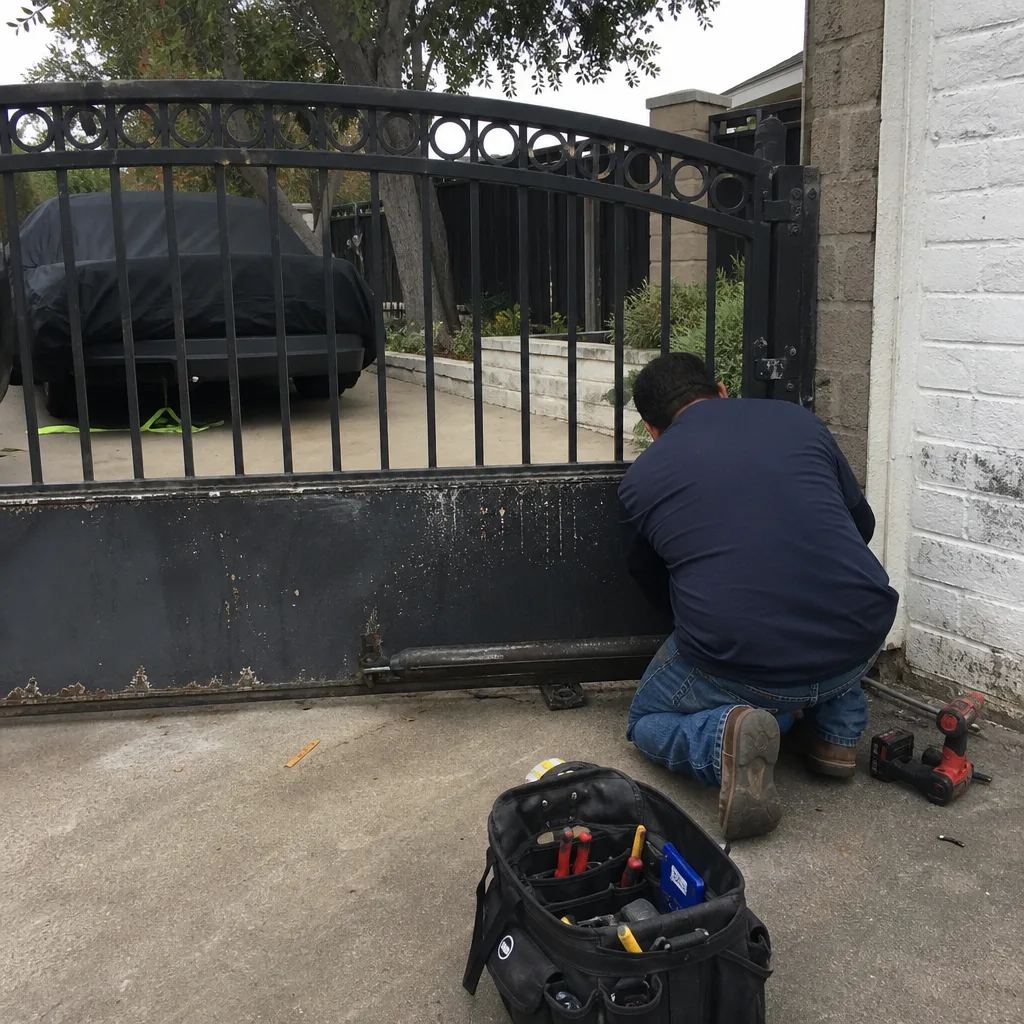 Before
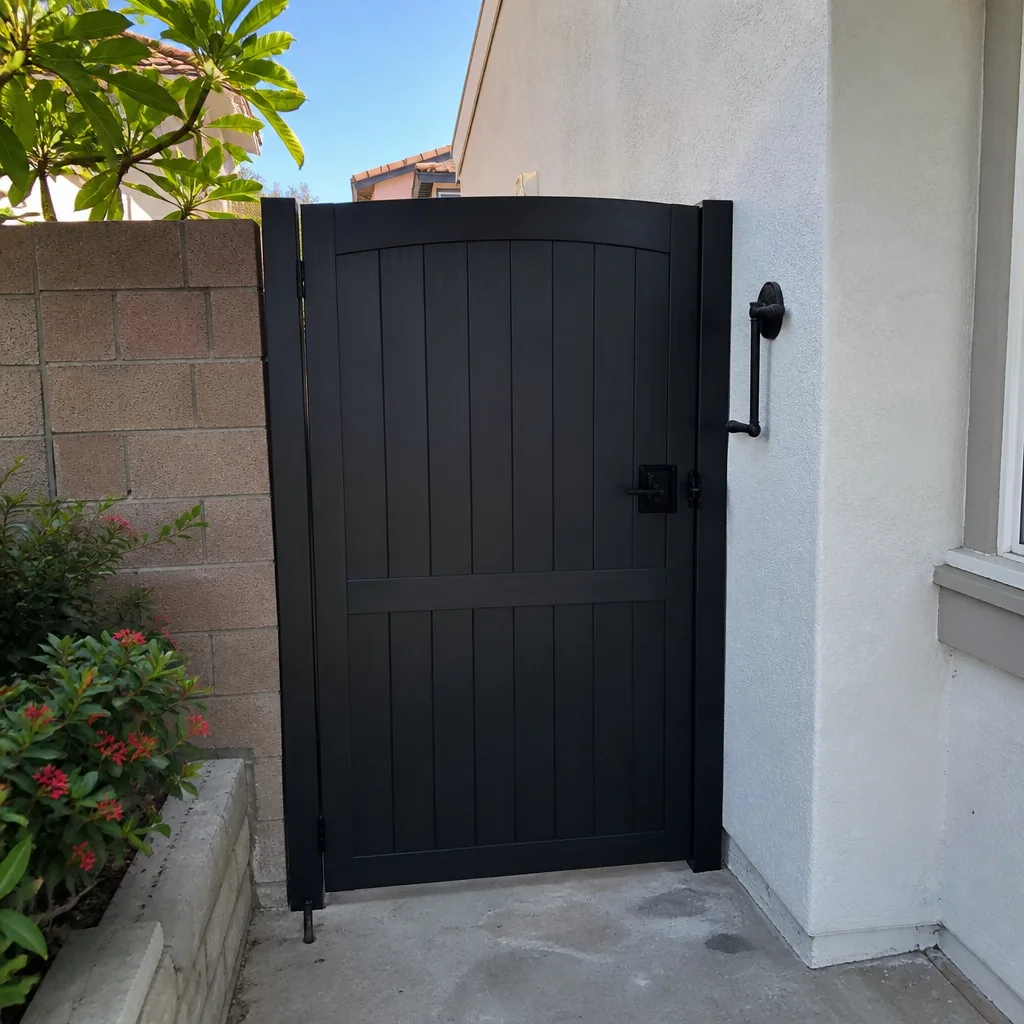 After
After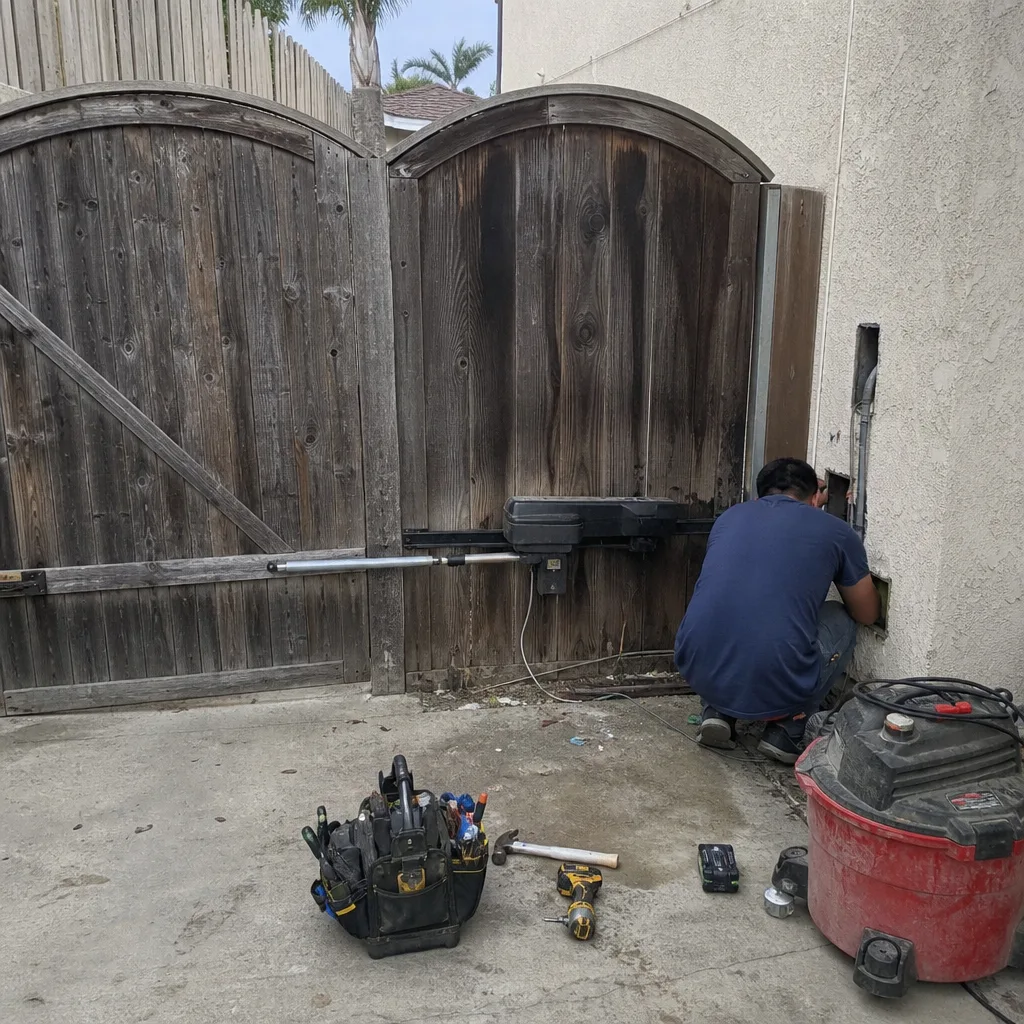 Before
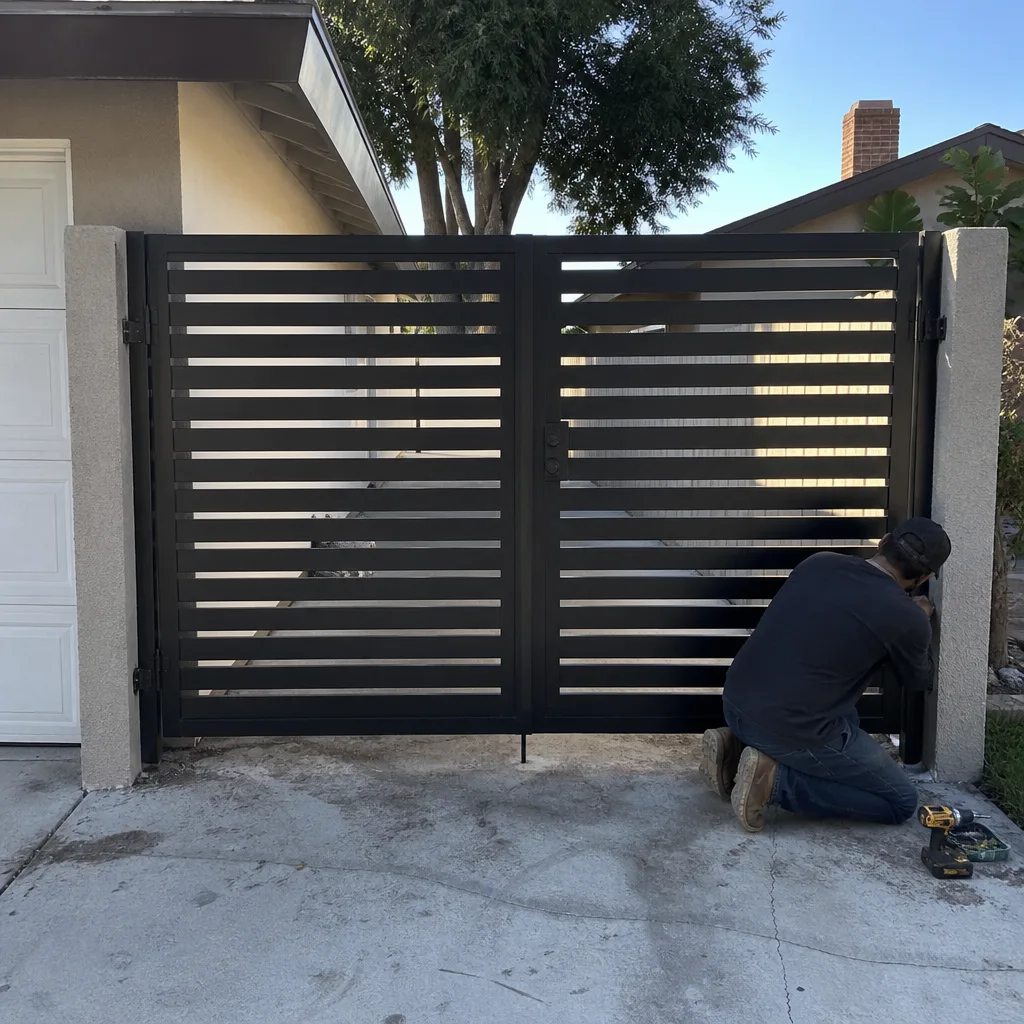 After
AfterHow to Hire a Gate Repair Contractor in Huntington Beach: A Step-by-Step Guide
Every year in Huntington Beach, homeowners pay twice for the same gate repair. The first payment goes to a contractor who diagnoses verbally, replaces a part, and leaves no record of what was found or why. The second payment goes to the next contractor, who has to open the operator box cold, trace the wiring from scratch, and charge you to rediscover what the first technician already knew. Our Complete Guide to Gate Repair in Huntington Beach is about avoiding that second payment. You’ll learn a documentation-based framework for evaluating gate repair contractors in Huntington Beach, the four documents any legitimate visit should produce, the questions that separate diagnostics-first technicians from parts-swappers, and the red flags that appear long before you hand over a deposit.
Quick Answer
To hire a gate repair contractor in Huntington Beach, verify that the contractor provides a written scope and written price before any work begins, produces a documented record of what was found and what was changed, and can service the specific automation brand already installed on your property. Ask the diagnostic questions in this guide before booking, then require the four documents described below from every visit. A verbal estimate with no paperwork is the single strongest signal that you’ll pay twice for the same repair.
Table of Contents
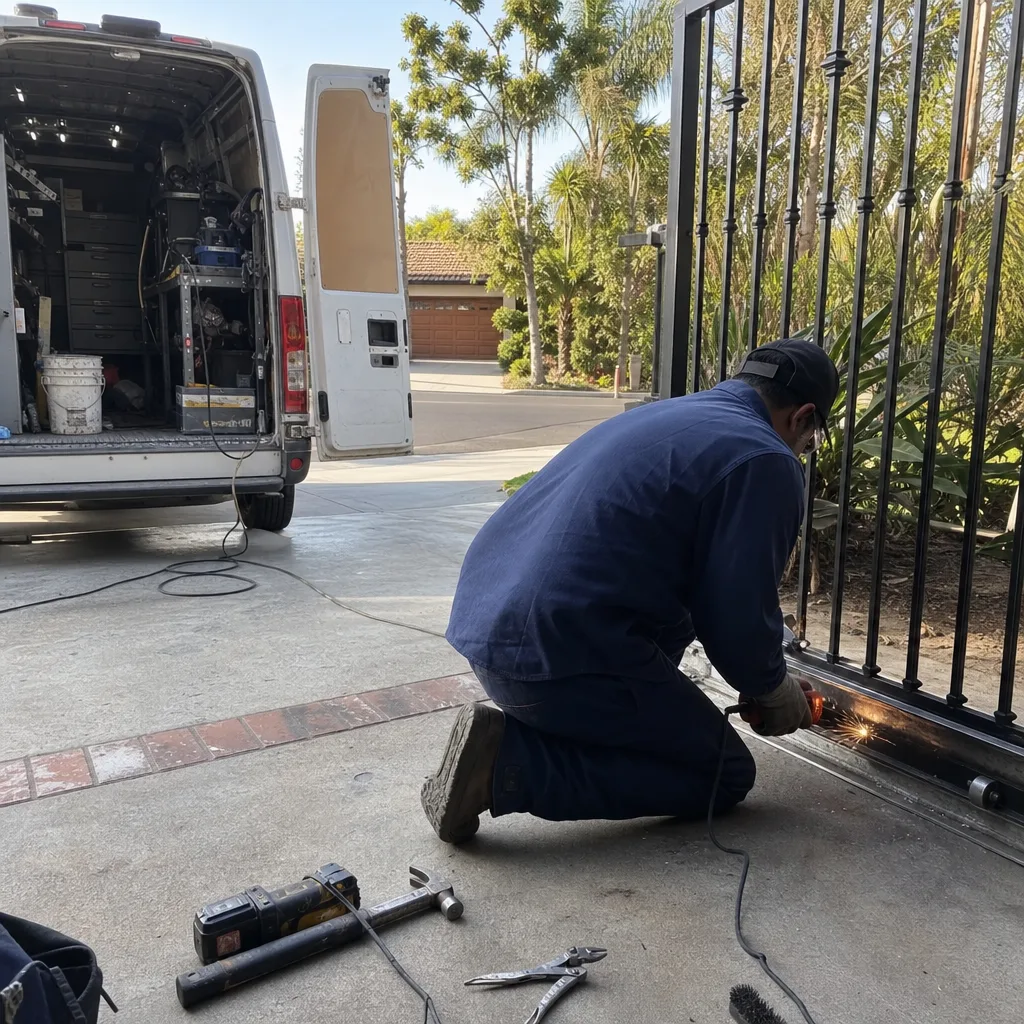
- The Documentation Standard: Why Paperwork Outranks Reviews
- The Four Documents Every Gate Repair Visit Should Produce
- Questions to Ask Before You Book: Separating Diagnostics-First from Parts-Swappers
- How to Read a Gate Repair Quote: Line Items That Belong There
- Why the Cheapest Written Quote Beats the Cheapest Verbal Quote
- Red Flags for HOA-Adjacent and Access-Controlled Properties
- What Huntington Beach Specifically Does to Gates
- The Hiring Process in Seven Steps
 Before
 After
AfterThe Documentation Standard: Why Paperwork Outranks Reviews
A contractor with 500 five-star reviews who quotes verbally and leaves no paperwork has given you no way to dispute a return charge six months later when the “repaired” control board fails again. In a he-said/she-said dispute, the homeowner almost always loses. The contractor says the failure is a new problem. You say it never worked right. There’s no record of what was found, what was adjusted, or what was installed. Your only leverage is the review you haven’t written yet.
Reviews measure how a contractor made people feel on the day of the visit. They don’t measure whether the repair was actually correct, whether the right part was used, or whether the root cause was addressed or just temporarily suppressed. A technician who is polite, fast, and cheap can accumulate hundreds of glowing reviews while leaving behind a trail of incomplete repairs that fail after the review window closes.
In Huntington Beach, where salt air accelerates corrosion on exposed gate hardware and wiring, the gap between a correct repair and a temporary patch shows up months later, not days. The homeowner has no way to know whether the technician replaced the corroded limit switch or just bent the contact arm back into position. The gate works for two weeks. Then it doesn’t. And the review you already left says “great guy, fast service.”
What you need instead is evidence. A written scope of work prepared before anything is touched. A written price tied to that scope. A photographic record of what was found and what was changed. A close-out summary that states what was left behind and why. These four documents convert gate repair services from an unverifiable transaction into a reviewable record. When a future problem arises, the paperwork either confirms it’s covered or clearly establishes that it’s new. Without the paperwork, everything is a negotiation. With it, everything is a reference.
This is the standard Vance Gate Repair Huntington Beach home operates under on every residential visit. Adrian Vance developed this documentation habit on commercial access-control sites starting in 2014, where a missing wiring diagram meant the next technician wasted billable hours tracing circuits. The practice carried over directly to residential driveway gates, where homeowners benefit from the same record-keeping a commercial facility manager expects as default.
The Four Documents Every Gate Repair Visit Should Produce
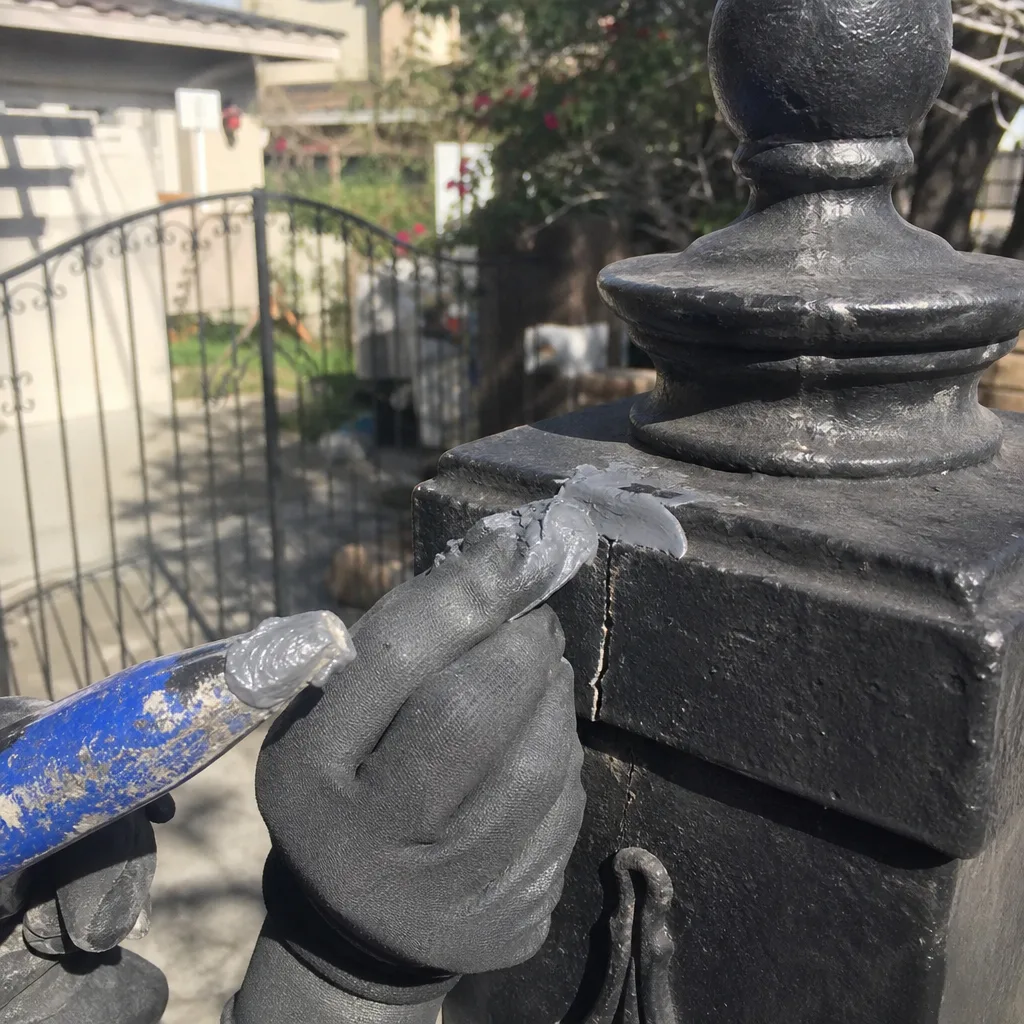
A legitimate gate repair visit in Huntington Beach should end with four things in your hand or in your inbox. If a contractor produces fewer than four, you’re accepting an evidence-free transaction. Here’s what to require, and what each document is actually for.
- The written scope of work. This is a statement, before any tool comes out, of what the contractor intends to do and why. It should name the problem as the technician understands it, the diagnostic steps already performed, and the specific repairs or replacements planned. A written scope protects you from scope creep and gives you leverage if the contractor starts adding charges mid-job.
- The written price. Tied directly to the scope. The flat price is written down and handed over before work begins. Not an estimate range, not a verbal ballpark, not a “we’ll see how it goes.” A number, on paper, attached to the work described. If the technician discovers an additional problem during the repair, that requires a new written scope and a new written price before that additional work starts.
- The wiring diagram or photographic evidence set. This is the record of what was found and what was changed. Photographs of the operator box before and after, the limit switch positions, the photo-eye alignment, the capacitor ratings, the part numbers installed. A wiring diagram where the situation calls for it. This is the document that makes your second repair cheaper if a different contractor ever has to work on the same gate, because it shows exactly what the previous technician touched and how they left it.
- The close-out summary. A written statement of what was done, what was installed, what was adjusted, and what was left as-is and why. This is the document you reference when something fails three months later. It either confirms the failure is within the contractor’s warranty scope, or it establishes that the problem is new and unrelated to the previous work.
None of these four documents are complicated to produce. A technician with a smartphone camera and a clipboard can deliver all four in under ten minutes on a residential visit. The reason most contractors don’t produce them isn’t that it’s hard. It’s that documentation creates accountability, and accountability has a cost. Contractors who don’t document their work are making a business decision about legal exposure, not about efficiency.
When you’re comparing gate repair options in Huntington Beach, ask each contractor directly: “What documentation do I get at the end of the visit?” The answer tells you more about how that contractor handles disputes than any review ever will.
Questions to Ask Before You Book: Separating Diagnostics-First from Parts-Swappers
Before you schedule a gate repair in Huntington Beach, run the contractor through these questions. The goal isn’t to quiz them on trade trivia. It’s to identify whether their default mode is diagnosis or parts replacement. A parts-swapper listens for the symptom and reaches for the bin. A diagnostics-first technician measures, tests, and confirms before replacing anything.
- “What’s your diagnostic process before you replace any parts?” Listen for a description of testing: incoming voltage checks, limit switch verification, photo-eye alignment tests, capacitor readings, control board diagnostics. If the answer is “we usually just replace the most common failure part and go from there,” you’re talking to a parts-swapper. You’ll pay for the first guess, then the second guess, then maybe the right fix eventually.
- “Do you work on the motor brand that’s already installed, or do you recommend replacement?” A contractor who only installs one brand of opener will recommend replacing whatever you have, even when a repair is cheaper and entirely viable. A contractor who services multiple brands, like LiftMaster, FAAC, BFT, and Linear, can actually diagnose the unit you own. If the answer is immediate replacement talk before anyone has seen the gate, end the call.
- “What do I get in writing before you start?” The correct answer is a written scope and a written price. If the contractor says they don’t do written quotes for small repairs, or that the price depends on what they find, or that you’ll get a receipt when they’re done, you’re booking an evidence-free transaction.
- “What documentation do I get when you finish?” Look for photo records, a close-out summary, a list of parts installed. Anything less means you have no reference point for a future warranty claim.
- “If the same problem comes back in six months, how do you determine whether it’s covered?” This question exposes the contractor’s dispute process. A contractor with a real warranty and documentation practices will point to the paperwork. A contractor without one will hedge, deflect, or start talking about “new problems” before the old one is even discussed.
- “Who’s the technician who’ll be on the call, and are they background-checked?” You want a named person, not a dispatch lottery. A contractor who can’t tell you who’s coming before the day of the visit is treating your property as a slot in a schedule rather than a specific job.
The pattern across all six questions is the same: you’re looking for evidence that this contractor can produce a record, not just a result. A gate that works today but has no documentation is a gate that will cost you again when the underlying issue resurfaces.
How to Read a Gate Repair Quote: Line Items That Belong There
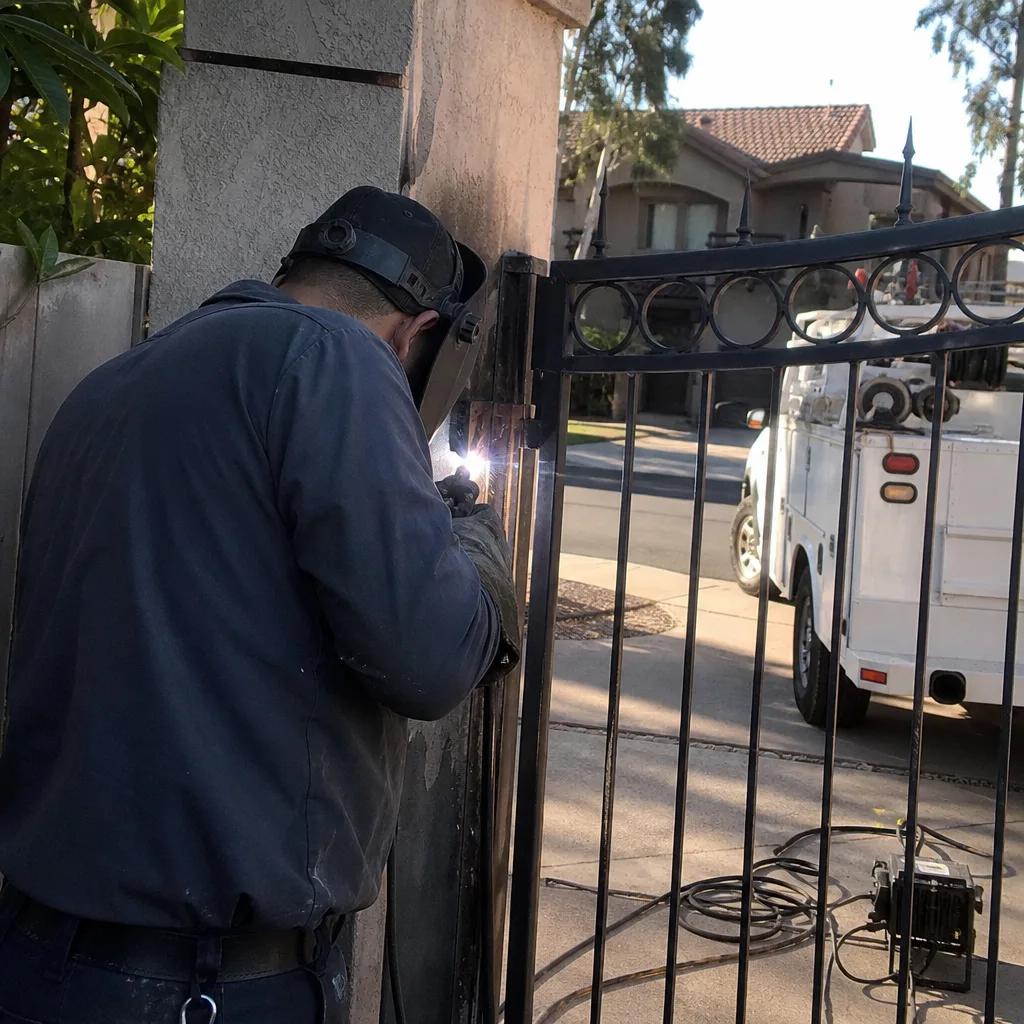
A gate repair quote in Huntington Beach should read like a test report, not a sales brochure. Here’s what belongs on the page, and what should set off an alarm.
Line items that should be there:
- Diagnostic fee, if any, and whether it’s waived with the repair. Some contractors charge a trip or diagnostic fee and apply it to the repair if you proceed. That’s fair. What’s not fair is a diagnostic fee that’s never disclosed until the end of the visit.
- The specific part name and part number. Not “opener parts” or “motor assembly” but the actual component: a FAAC 790D control board, a LiftMaster K75-10066 limit switch, a BFT IGEA capacitor. A specific part number means exactly one thing: the technician knows what’s wrong and what they’re installing. A vague “parts” line means the technician is guessing or planning to figure it out as they go.
- Labor, broken out by task. Not just a single “repair” line. You want to see the labor associated with each discrete repair: diagnostic time, part replacement, adjustment and testing, close-out documentation.
- The warranty terms, in writing. How long, what’s covered, what’s excluded, and how a claim works. If the warranty is verbal, it doesn’t exist.
- A note about what was checked and found to be working. A good quote doesn’t just list the broken part. It shows that the technician verified surrounding components, so you know the repair is scoped correctly and not just the first visible failure.
Vague language that signals a problematic contractor:
- “Parts and labor” as a single line item. This gives the contractor a blank check. Which parts? At what price? Installed by whom? A single line item with no detail is a scope of work that can’t be disputed.
- “Miscellaneous materials” or “shop supplies.” This is where padded charges live. Every material required for a gate repair is identifiable: wire, conduit, fasteners, terminals, the part itself. There’s no mystery material in this trade.
- “As needed” or “TBD” anywhere in the price column. An as-needed price is not a price. It’s permission to discover the final number at the end.
- “Will assess on arrival” with no initial scope. This is code for “the price will be whatever it costs once I’ve started and you can’t say no.” A legitimate contractor can give a written scope and a written price range based on a phone description and a photo. The on-site assessment is for confirmation, not for the first disclosure of cost.
One note on Gate Repair in Huntington Beach pricing: gate repair work in this market typically runs from around $180 for a minor photo-eye or limit switch adjustment to $900-$1,600 for a full swing-gate motor replacement, depending on the brand and whether the arm brackets need fabrication. A written quote protects you far more than a cheap verbal number ever will, which brings us to the next point.
Why the Cheapest Written Quote Beats the Cheapest Verbal Quote
Homeowners routinely choose a higher verbal estimate over a lower written one because the voice on the phone sounded reassuring and the number was immediately available. This is a category error. The verbal quote isn’t cheaper. It’s just less defined.
A verbal quote is an unenforceable promise about the future. Six months later, when the same problem recurs, the verbal quote contains no scope of work, no part numbers, no description of what was diagnosed or why. It protects nothing. The written quote, even at a slightly higher price, contains the exact part number installed, the work performed, and the terms under which the repair is guaranteed. When a dispute arises, the written quote is the difference between a warranty claim and a small-claims case.
Consider the math from the contractor’s perspective. A contractor who refuses to write prices is either (a) charging inconsistently based on what they think you’ll tolerate, or (b) planning to expand the scope once the gate is disassembled and you’re committed. Either way, the verbal quote is an estimate only in the colloquial sense. The written quote is an estimate in the legal sense: an offer, tied to a scope, that you can hold up against the final invoice.
The cheapest verbal quote is the most expensive option on the table because it exposes you to the full cost of rediscovery. When the repair fails and a second contractor arrives, that contractor has to diagnose from zero. The verbal quote left no trail. The written quote shows the part number, the adjustment, and the service date, so the second contractor can pick up where the first left off. You pay once for the repair and once for the documentation that should have existed from the start.
At Vance Gate Repair, the written price is handed over before any work starts, as a matter of routine. It’s Haven Standard Clause 1, and it applies to every job from a photo-eye alignment to a full Gate Installation in Huntington Beach. There’s no “call for a quote” stage because the price is the point, not the obstacle.
Red Flags for HOA-Adjacent and Access-Controlled Properties
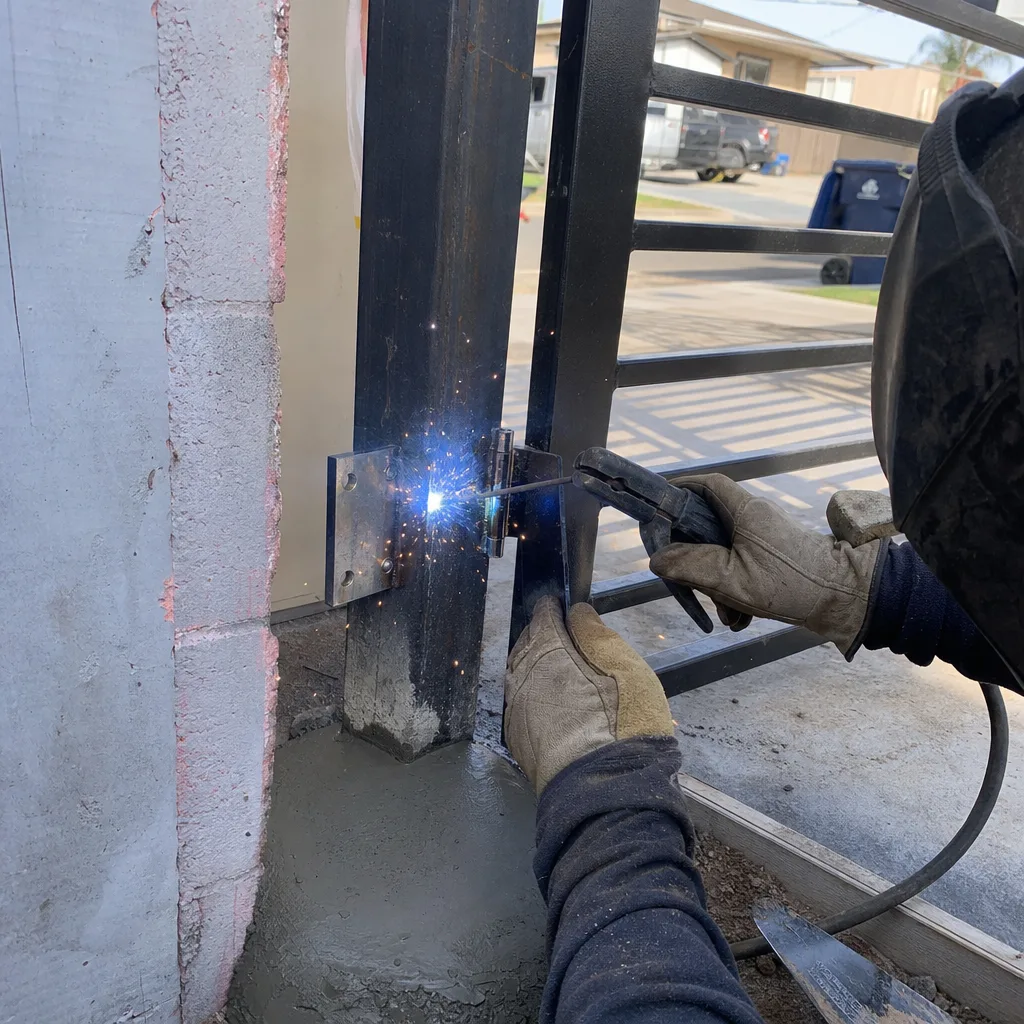
Huntington Beach has a significant number of communities where gates are shared infrastructure, governed by HOAs, or integrated with access-control systems beyond a simple keypad. These properties introduce a layer of accountability that many contractors are not equipped to handle, and that imbalance shows up in the paperwork.
Red flag one: the contractor can’t tell you who’s responsible for what. If the gate serves multiple homes or is maintained under an HOA agreement, the repair responsibility may be split between the association and the individual homeowner. A contractor who doesn’t ask about HOA jurisdiction before quoting is not asking the right questions in Huntington Beach.
Red flag two: the quote doesn’t mention the access-control integration. If your gate is controlled by a telephone entry system, a card reader, or a vehicle detection loop, the gate and the access system are separate-but-connected systems. A repair to the gate operator can affect the access control, and vice versa. A contractor who quotes a motor replacement without noting the access-control interface is going to hand you a gate that opens manually but won’t integrate with the keypad or the call box.
Red flag three: no documentation of third-party equipment. If the access control was installed by a different company, the gate repair contractor should document the existing configuration before touching anything. A photo of the wiring at the interface point, a note on the voltage, a record of what was connected where. Without that record, you’re stuck in the middle of a blame triangle when the gate works but the buzzer doesn’t.
Red flag four: the contractor won’t coordinate with the HOA’s preferred vendor. Many Huntington Beach HOAs have a preferred or contracted gate vendor. If the contractor you’re considering refuses to coordinate, review the HOA’s vendor agreement with them, or work from the HOA’s documented specs, you’re setting up a conflict that will eventually land on your porch.
What Huntington Beach Specifically Does to Gates
Gates fail differently in Huntington Beach than they do in Irvine or Fountain Valley. The Pacific Ocean is a few minutes away, and the salt air is the single most destructive force on gate hardware in this city. It’s not dramatic. It’s chemistry.
Salt air accelerates corrosion on exposed steel, on gate hinges, on the track rollers, and most critically on the wiring and terminal connections inside the operator box. A limit switch that might last a decade inland, in dry air, fails in three or four years here because the contacts corrode in the marine environment. A control board that gets a light dusting of desert dust will get a film of salt and moisture in Huntington Beach, and that film conducts electricity in ways the board was never designed for.
This local factor matters for hiring decisions because it changes what correct repair work looks like. A technician who installs a new limit switch without checking the wiring terminals for corrosion has fixed the symptom and ignored the cause. A technician who works on gates in Huntington Beach but doesn’t mention the corrosion factor hasn’t actually diagnosed anything. They’ve swapped a part.
When you’re interviewing contractors, ask how salt exposure affects your specific gate. A knowledgeable answer might mention the marine layer’s effect on capacitor life, the need for corrosion-resistant terminals, or the importance of dielectric grease on the wiring connections. A vague answer means the contractor is thinking about gates in general, not your gate in Huntington Beach specifically.
Huntington Beach also has two distinct gate populations. Coastal properties, from the pier north toward Sunset Beach, see the heaviest salt exposure and the fastest corrosion. Inland neighborhoods, such as the tract homes around the Wetlands or up toward Goldenwest, see less salt but more dust and more heat in the summer, which affects capacitor life and motor thermal cutoffs differently. A good contractor knows which zone you’re in and can speak to your specific failure pattern.
The Hiring Process in Seven Steps
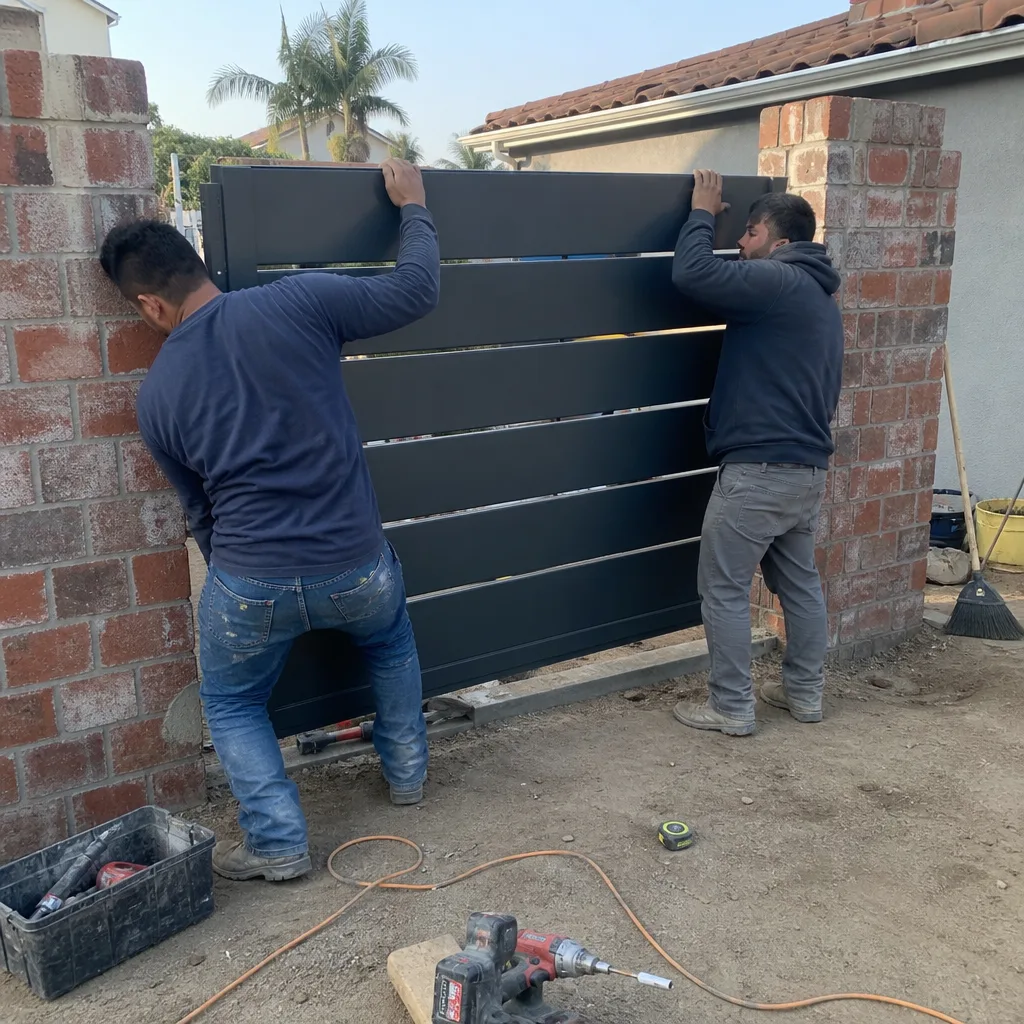
Here is the hiring framework, distilled into a sequence you can follow the next time your gate stops working in Huntington Beach.
- Gather the facts before you make a call. Note the gate type (swing, slide, cantilever), the motor brand (check the label on the operator box), the symptom, and when it started. Photograph the operator box, the gate in its stuck position, and any visible damage. This gives the contractor the information needed for a meaningful phone diagnosis and written quote.
- Call and ask the six diagnostic questions. Refer to the list in the “Questions to Ask Before You Book” section. If the answers don’t include written scope, written price, brand compatibility, and documentation, thank them and call the next name.
- Request a written quote before scheduling. The contractor should be able to provide a written scope and a written price range based on your description and photos. If they can’t, that’s an answer.
- Verify the quote includes specifics. Part numbers, labor breakdown, warranty terms, notes on what was checked and found working. A quote with these elements is evidence that a real diagnostic process is underway.
- Confirm the technician, not just the company. Ask who’s coming, whether they’re background-checked, and whether you’ll get a name and photo before arrival. You should know who’s walking onto your property before they ring the bell.
- Require the four documents at completion. Written scope, written price, wiring diagram or photo evidence, close-out summary. If they can’t produce these, you’ve learned something important about what a warranty claim will look like.
- File the paperwork. Keep the close-out summary, the photo record, and the warranty terms somewhere you can find them in eighteen months. In Huntington Beach, where salt air shortens gate component life, you will almost certainly need to reference this documentation before the gate’s lifespan is over.
This process takes longer than accepting the first contractor who answers the phone. It also costs far less than paying twice for the same repair because the first contractor left no record of what was done.
Common Mistakes to Avoid
- Choosing a contractor because they answered the phone fastest. Availability says nothing about competence. A contractor with an empty schedule often has it for a reason. Verify documentation practices before verifying speed.
- Accepting a verbal quote as binding. A verbal quote is a conversation. A written quote is a contract offer. Only the second one protects you in a dispute, and in Huntington Beach’s salt-air environment, disputes happen.
- Paying a large deposit before a written scope exists. The written scope comes first. Then the price. Then the deposit, if one is required at all. Any sequence other than that is designed to increase your commitment and reduce your leverage.
- Ignoring the brand issue. A contractor who only installs one automation brand will steer you toward replacing whatever you have, even when a repair is cheaper. Ask before booking whether the contractor services LiftMaster, FAAC, BFT, Linear, and the other major brands, or just installs one of them.
- Not asking about the warranty process. A warranty is only as good as the process for claiming it. Ask directly: “If this fails in eight months, what do I do?” If the answer is vague or defensive, the warranty is marketing, not coverage.
- Assuming the cheapest quote is the best deal. The cheapest written quote is likely the best deal. The cheapest verbal quote is likely the most expensive mistake in the group, because you’re paying for a repair that has no documented scope and no enforceable outcome.
- Forgetting that the gate is a security device, not a convenience. A gate that doesn’t close is an open access point. A gate that won’t open can trap a vehicle behind it. In Huntington Beach’s HOA communities, a malfunctioning gate can also become a liability issue shared with neighbors. The documentation standards in this guide exist because the stakes are higher than most homeowners assume.
When to Call a Professional
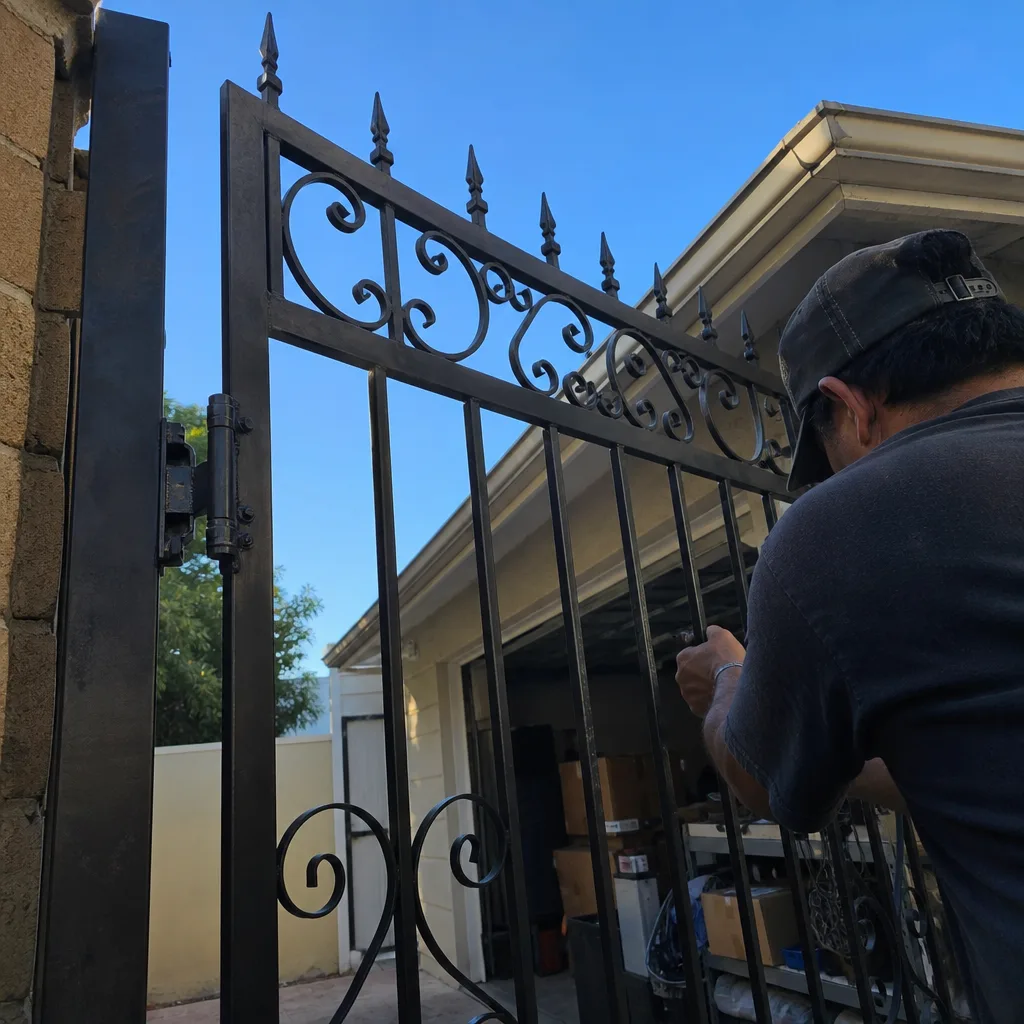
Call a gate repair professional in Huntington Beach when the gate opens but won’t close fully, closes but reverses unexpectedly, makes a grinding or whining noise it didn’t make last month, or moves slowly enough to notice. Call when the operator hums but doesn’t move the gate, when the keypad accepts a code but the motor doesn’t respond, or when a photo-eye (the infrared beam that stops the gate if something crosses the path) is visibly out of alignment. Call immediately if the gate closes on a vehicle or a person, if there are exposed wires inside the operator box, or if the gate moves on its own without a command. These are not DIY situations. The electrical systems involved can injure, and the gate itself is a heavy moving object. Vance Gate Repair Huntington Beach offers free estimates in Huntington Beach, including a free second opinion on any written estimate from another company. Call (657) 271-2877 to schedule.
Frequently Asked Questions
Gate repair in Huntington Beach typically runs between $180 and $340 for minor adjustments like photo-eye realignment or limit switch resetting, while more involved repairs such as control board replacement or swing-arm motor replacement run from $450 to $1,600 depending on brand and configuration. Every job should include a written price before work starts, and the quote should break out parts and labor separately. Vance Gate Repair provides written pricing on every visit, so the number is agreed before any tool comes out. Call (657) 271-2877 for a free estimate on your specific gate.
Ask for a written scope of work and a written price before any work begins, and confirm that the contractor can service the specific automation brand installed on your property. Request evidence of past work through a documentation practice: a legitimate contractor can tell you exactly what records you’ll receive when the visit is complete. If the contractor balks at written documentation, treats your brand as irrelevant, or can’t name the technician who will be dispatched, keep looking.
Some can, some can’t, and the difference matters in Huntington Beach where a wide variety of brands appear across different neighborhoods and vintages. Ask whether the contractor services LiftMaster, FAAC, BFT, and Linear, along with other common brands, before committing. At Vance Gate Repair, we service nine major automation brands, so the recommendation is based on what’s best for your existing gate, not on what we happen to stock.
A gate repair quote should include the diagnostic findings, the specific part number being installed, the labor broken out by task, the warranty terms in writing, and a note on what was checked and found to be working. Vague line items like “parts and labor” as a single entry or “miscellaneous materials” indicate a contractor who isn’t actually measuring the job. The quote should also state the total price in writing, before any work begins.
Most residential gate repairs in Huntington Beach are completed in a single visit, typically 60 to 90 minutes for a straightforward part replacement or adjustment. More involved work, such as a full Gate Motor & Opener in Huntington Beach replacement or a welded hinge repair, may require a follow-up visit for fabrication or parts ordering. The contractor should give you a written time estimate as part of the scope of work, and you should know before the technician leaves whether additional work is required.
Bring the paperwork to Vance Gate Repair and we’ll review it at no cost. A free second opinion on any written estimate from another company means you can compare the scope, the part numbers, and the warranty terms side by side before deciding. A quote that looks legitimate often reveals gaps when it’s placed next to a more complete one. Call (657) 271-2877 to schedule a review.
The Bottom Line
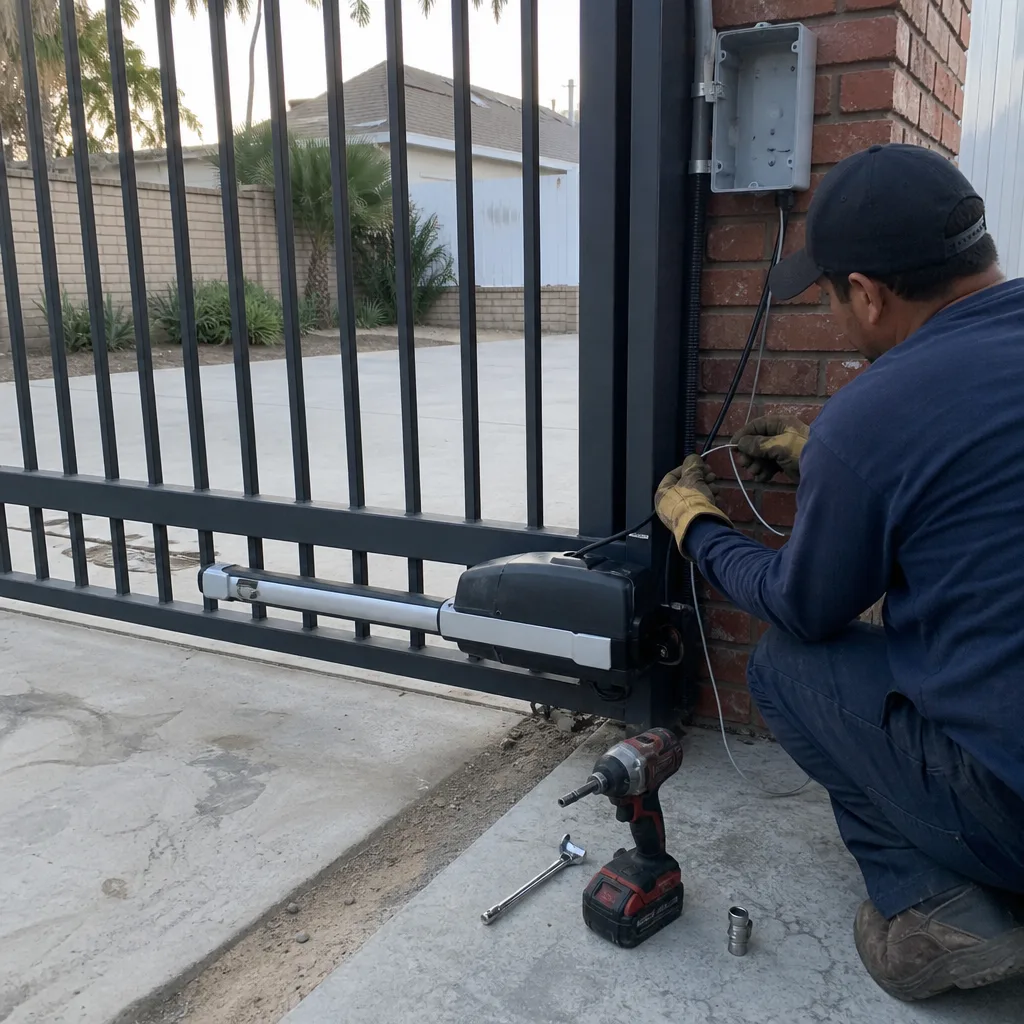
Hiring a gate repair contractor in Huntington Beach comes down to one test: does the contractor produce written evidence, or only verbal reassurance? The contractor with great reviews and no paperwork has given you no leverage when the repair fails. The contractor with a written scope, a written price, a photo record, and a close-out summary has given you everything you need to hold them accountable and to avoid paying twice for the same problem. In a salt-air environment like Huntington Beach, where gate components fail in predictable patterns, documentation is not a luxury. It’s the difference between a repair and a recurring expense. Ask the questions. Require the documents. Keep the paperwork. For more guides & resources, or to call (657) 271-2877 when you need a gate contractor in Huntington Beach who writes it all down before anyone picks up a tool.
Written by Adrian Vance, Owner at Vance Gate Repair Huntington Beach, serving Huntington Beach since 2014.