
Last updated September 20, 2026
Free on-site gate assessment - hinges, posts, and your LiftMaster or Nice gate operator checked before anything is quoted
The assessment is free and the quote is the invoice.
 Before
 After
After Before
 After
After Before
 After
AfterGate Repair Permits, Codes & Inspections in CA: What You Need to Know
Most California homeowners replace a failed gate motor the way they’d replace a water heater: call a contractor, pay the invoice, move on. The difference is that a water heater swap rarely triggers a lawsuit, while a gate operator swap can. California treats automated gates as life-safety devices, not just property improvements. The California Building Code and UL 325 compliance requirements separate a simple maintenance repair from a permitted modification, and the line sits exactly where most people don’t look. In Huntington Beach, that line gets sharper: local ordinances add layers for residential driveway gates that state code alone doesn’t address. This guide walks through what triggers a permit, what doesn’t, what inspection actually involves, and what happens when unpermitted work surfaces at resale. By the end, you’ll know whether your gate project needs paperwork before it needs parts.
Quick Answer
Most gate repairs in California, including motor swaps on existing permitted automation, bearing replacements, hinge welding, and photo-eye realignment, are exempt from permits because they’re classified as maintenance. You typically need a permit when you add automation to a manual gate, replace a motor with a higher-torque model, widen or relocate a gate opening, install new electrical service to a gate, or modify the gate’s physical structure. In Huntington Beach, electrical permits for new gate circuits run through the city’s building division, and UL 325 compliance is enforced at the state level regardless of whether a permit was pulled.
Table of Contents
- What Actually Triggers a Gate Permit in California
- Maintenance vs. Modification: The Legal Line
- UL 325 Compliance and Why It Matters More Than the Permit
- Huntington Beach Gate Ordinances and Local Layers
- As-Built Documentation and Resale Protection
- What Happens When Work Was Done Without a Permit
- How to Verify Whether Your Existing Gate Was Permitted
- Common Mistakes to Avoid
 Before
 After
AfterWhat Actually Triggers a Gate Permit in California
California bases gate permitting on the California Building Code (CBC), specifically the sections covering electrical work, structures, and automated vehicular gates. The trigger isn’t whether the gate looks different when you’re done. It’s whether the work changes the electrical demand, the structural load path, or the safety system’s operating parameters.
The most common permit triggers we see in Huntington Beach:
- New automation on a manual gate: Installing any motor, operator arm, or control board on a gate that was previously manual. This adds electrical load and creates a UL 325 regulated device where none existed.
- Motor replacement with a higher-torque model: Swapping a 1/2 HP operator for a 1 HP operator changes the force the gate can exert. UL 325 requires entrapment protection calibrated to the new motor’s force profile. This is a compliance issue even if the physical swap takes an hour.
- New electrical service to the gate: Running a new circuit, trenching conduit, or adding a subpanel at the gate location. This is electrical work governed by the California Electrical Code and requires a permit in every Orange County jurisdiction we work in.
- Widening or relocating a gate opening: Moving posts, changing the clear opening width, or altering the gate’s swing path changes the structural load on the posts and hinges. This is a structural modification, not maintenance.
- Replacing a gate panel with a heavier material: Swapping an aluminum gate for a steel or wrought-iron gate of the same size can double or triple the weight. The existing posts, hinges, and operator may be undersized for the new load.
What does not trigger a permit: replacing a failed control board with the same model, swapping a sheared hinge pin, welding a cracked weld on the existing gate frame, realigning a photo-eye, replacing gate wheels or rollers, and adjusting limit switches. These are classified as maintenance because they restore the gate to its originally approved condition rather than changing it.
The distinction matters because California doesn’t have a “minor work” exemption for automated gates the way some states do for fences under 6 feet. If the work changes the gate’s safety profile, the permit requirement attaches whether or not anyone applied for one.
Maintenance vs. Modification: The Legal Line
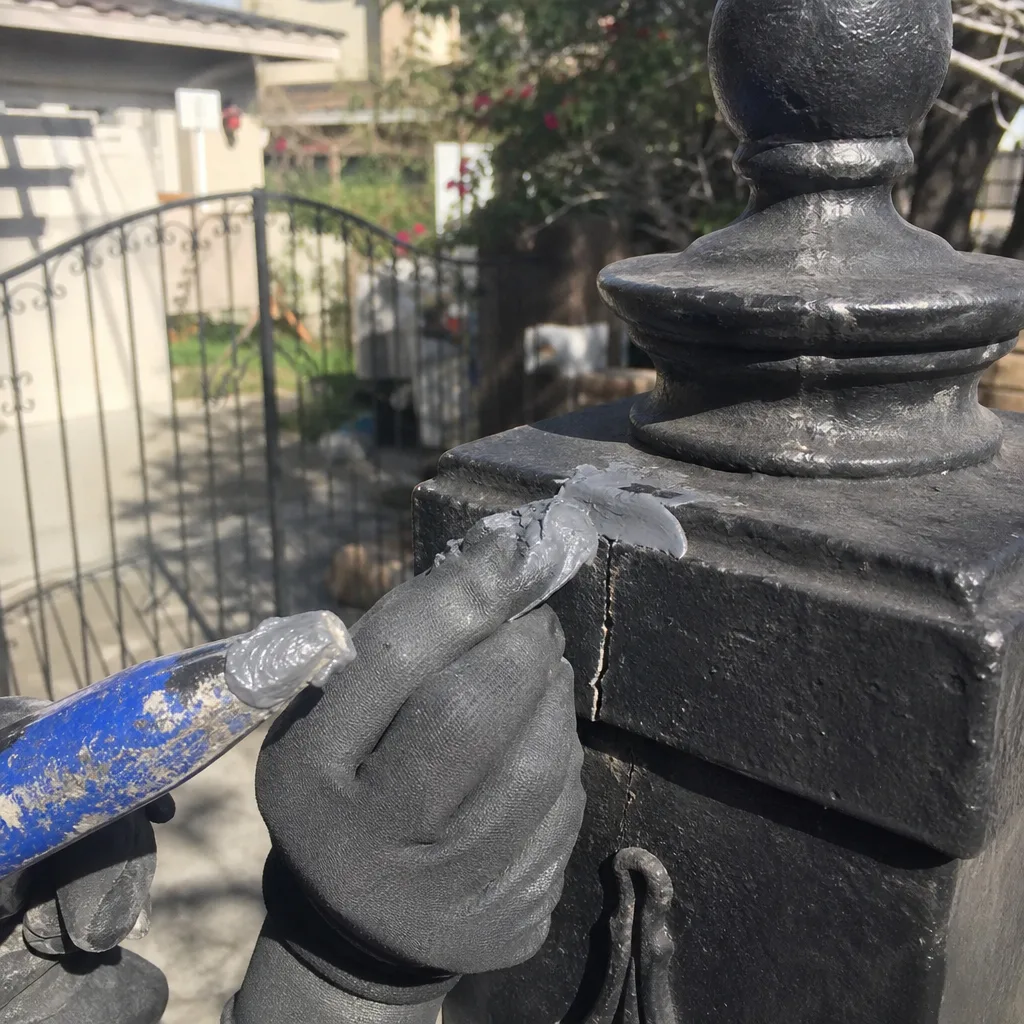
California building officials use a straightforward test: does the work restore the original design, or does it change it? Restoration is maintenance. Change is modification. The problem is that homeowners and some contractors apply this test too loosely.
Here’s the test applied to common gate work in Huntington Beach:
- Replacing a failed FAAC or BFT control board with the identical model: Maintenance. No permit. The gate’s safety profile is unchanged.
- Replacing a failed FAAC control board with a different model that has different force settings: Modification. The new board has a different torque curve and different entrapment protection requirements. UL 325 compliance must be re-verified.
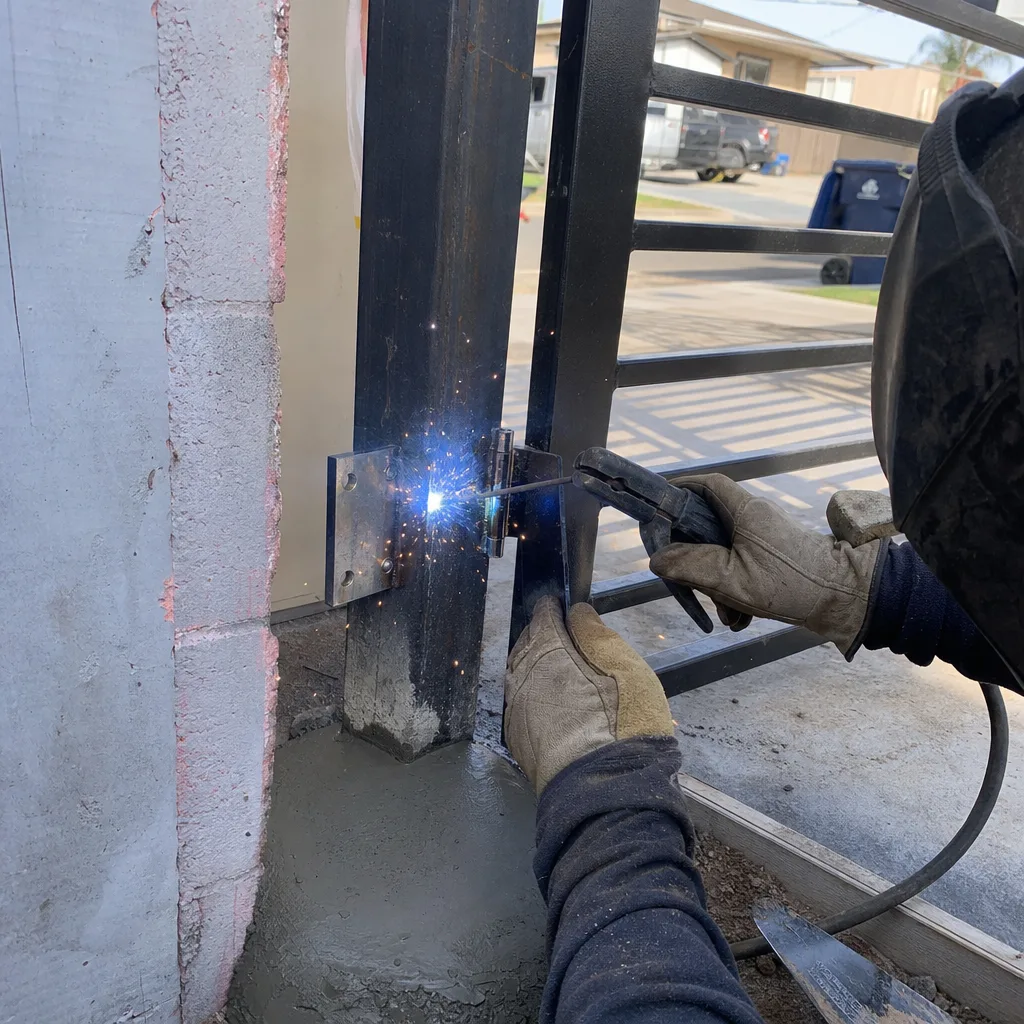
- Welding a broken hinge back onto an existing post: Maintenance. The structural design is restored.
- Cutting the gate down to fit a new driveway width: Modification. You’ve changed the gate’s mass distribution, swing arc, and wind load profile.
- Replacing a chain-drive operator with a belt-drive operator of the same horsepower: Arguably maintenance, but most inspectors we’ve worked with in Orange County want to see the spec sheet. If the belt-drive unit has different speed characteristics, the safety edge response timing changes.
The reason this line matters isn’t bureaucratic. It’s liability. If a gate injures someone, the injured party’s attorney will ask one question: was the gate’s safety system compliant with UL 325 at the time of the injury? If you replaced a motor and the new configuration was never verified, the answer may be no, and your homeowner’s insurance may deny the claim for work done without required permits.
We tell Huntington Beach homeowners this: if you’re unsure whether your repair is maintenance, write down what’s being changed and ask the city’s building division before work starts. For more guides & resources, see our blog. A five-minute call beats a five-figure liability exposure.
UL 325 Compliance and Why It Matters More Than the Permit
UL 325 is the national safety standard for automated vehicular gates. It’s not a California code, but California incorporates it by reference into the CBC. Every automated gate in the state is legally required to meet UL 325, whether or not a permit was ever pulled for the installation.
UL 325 mandates two independent forms of entrapment protection on every automated gate:
- A primary entrapment sensor: Typically a current-sensing circuit in the operator that reverses the gate when it encounters resistance, or a photo-eye that detects an obstruction in the gate path.
- A secondary entrapment sensor: Usually a safety edge (a pressure-sensitive strip on the gate’s leading edge), a second photo-eye, or a presence sensor.
Both systems must be tested and functional at the time of installation. The operator must reverse within 2 seconds of detecting an obstruction. The gate must not exert more than 40 pounds of force at any point in its travel.
Here’s the part most homeowners in Huntington Beach don’t know: these requirements apply to existing gates, not just new installations. If your gate was installed in 2005 with a single photo-eye and no safety edge, it was likely code-compliant at the time but is not UL 325 compliant today. When you replace the operator on that gate, you trigger the current standard, which means the second entrapment sensor must be added.
We regularly encounter this on Linear, Viking, and FAAC operators in Huntington Beach homes built between 1995 and 2010. The original installation was legal. The repair creates a compliance obligation that didn’t exist before the repair. That’s the hidden permit trigger most contractors skip, and it’s the one that shows up in injury litigation. See Gate Repair Warning Signs: A Huntington Beach Homeowner’s Reference Guide for what to watch for.
The practical rule: if your gate has an operator and you’re changing any part of the safety system, the finished gate must meet current UL 325, not the standard that was in effect when the gate was originally installed.
Huntington Beach Gate Ordinances and Local Layers
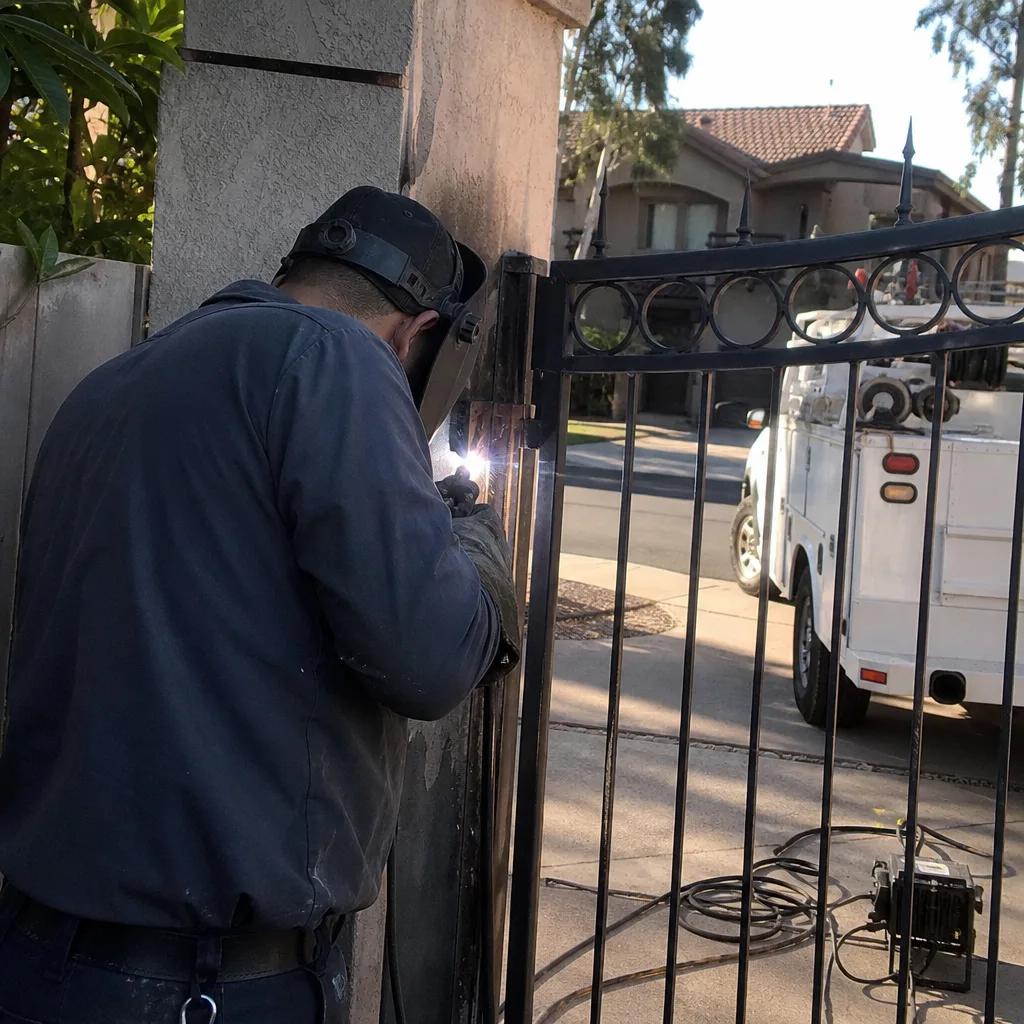
Huntington Beach adopts the California Building Code with local amendments through the city’s Building Division. For residential driveway gates, the city layers additional requirements on top of state code.
Key Huntington Beach specifics:
- Setback requirements: Huntington Beach requires driveway gates to be set back far enough from the property line that a vehicle can pull fully off the sidewalk before reaching the gate. This prevents a car waiting for the gate to open from blocking the sidewalk or encroaching on the public right-of-way. The exact setback varies by zone; the Building Division verifies it during plan review.
- Electrical permits: Any new electrical run to a gate motor, intercom, keypad, or vehicle loop detector requires an electrical permit through the city. This is standard California practice, but Huntington Beach enforces it consistently on residential work that many other jurisdictions overlook.
- HOA entry systems: Gates serving HOA entries in Huntington Beach neighborhoods are reviewed under the city’s multifamily and common-interest development provisions, not the single-family residential path. The process involves a different plan check category and often requires a traffic-control review by the Public Works Department.
- Coastal zone review: Properties in the Huntington Beach coastal zone, generally south of Goldenwest Street and west of Pacific Coast Highway, may require additional review for gate height and visual impact. The California Coastal Commission’s influence shows up in gate height restrictions and material finish requirements in this zone.
In practice, most gate repair in Huntington Beach stays on the maintenance side of the line. The permit-required work we see most often is new automation on manual gates and electrical service additions. If you’re adding a motor to a manual gate on a Huntington Beach property, plan for a permit and a UL 325 compliance check. We handle the full scope from gate installation in Huntington Beach to motor integration, and we’ll tell you before work starts whether your project is exempt or permitted.
As-Built Documentation and Resale Protection
An as-built record is a document that shows what actually got installed, as opposed to what the original plans called for. In gate work, the as-built matters because gate systems rarely match their original drawings. Motors get swapped, safety edges get added, wiring gets rerouted. Ten years later, nobody remembers what’s behind the panel.
When a permit is pulled for gate work, the city’s inspector verifies the work against the approved plans and the inspection record becomes part of the property file. When work is done without a permit, there’s no inspection record, which means there’s no official documentation of what exists.
Here’s why that matters at resale:
- Buyer due diligence: Sophisticated buyers in Huntington Beach increasingly request gate documentation during escrow. An unpermitted gate automation system is a negotiation point, not just a disclosure item.
- Appraisal and lending: Unpermitted electrical work can complicate financing if the appraiser or underwriter flags it. The gate itself rarely kills a deal. The unpermitted electrical circuit powering it can.
- Insurance underwriting: Homeowner’s insurance carriers in California have started asking about automated gates in some coastal markets. If the gate system is undocumented, the carrier may exclude coverage for gate-related claims or require a compliance certification before binding coverage.
The as-built record we leave on every job, whether permitted or not, includes a photographed inventory of the operator model, control board revision, safety sensor locations, limit switch settings, and wiring terminations. This is the Vance Gate Repair Huntington Beach home standard: a documented record that survives the current homeowner and protects the next one. When a future technician opens the panel, they’re not guessing.
What Happens When Work Was Done Without a Permit
You discover the gate automation was installed without a permit. Maybe you bought the house that way. Maybe a contractor told you it wasn’t needed. Either way, the question is what you’re actually facing.
Here’s the reality, stripped down:
- The city can require retroactive permitting: Huntington Beach’s Building Division can require you to obtain a permit for unpermitted work if it comes to their attention, typically through a complaint or a separate permit application that reveals it. The retroactive permit process requires the work to be brought up to current code, which may mean adding entrapment protection or re-running electrical that wasn’t done to code.
- Liability follows the owner: If the unpermitted gate injures someone, the homeowner’s insurance carrier will investigate whether the installation was code-compliant. An unpermitted installation that also fails UL 325 is a coverage denial waiting to happen. In our experience with gate-related injury claims in Orange County, the insurance investigation almost always focuses on the safety system, not the permit status. The permit issue is the secondary problem. The non-compliant safety system is the primary one.
- The contractor who did the work may be liable: California law holds contractors responsible for pulling required permits on permitted work. If a contractor performed permitted work without a permit and told you it wasn’t needed, you may have a claim against their license bond. The Contractors State License Board takes unpermitted work seriously when it’s reported.
The remediation path in Huntington Beach: get the gate inspected by someone who knows UL 325, document what exists, determine what’s non-compliant, fix the safety system first, then apply for the retroactive permit if it’s required. The safety fix usually matters more than the paperwork, but both should happen.
How to Verify Whether Your Existing Gate Was Permitted
If you want to know whether your Huntington Beach gate was ever permitted, here’s the verification path:
- Check the city’s online permit portal: Huntington Beach maintains an online permit lookup system. Search by address and look for permits referencing gate, driveway, electrical, or automation. Most Huntington Beach permits from the last 15 years are searchable online.
- Call the Building Division: If the online search is inconclusive, call the city’s Building Division and ask for a permit history on the address. You’ll need the assessor’s parcel number or the street address. This is a public record request and takes about 10 minutes.
- Look for the inspection sticker: Many permitted gate installations in Huntington Beach have an inspection sticker on the gate controller enclosure or the electrical panel. The sticker shows the permit number and the inspection date.
- Check the operator’s data label: The UL listing on the operator itself tells you the unit was manufactured for the US market, but it doesn’t tell you whether the installation was inspected. A UL-listed operator on an unpermitted installation is still an unpermitted installation.
- Review the home’s disclosure documents: When you bought the property, the seller’s disclosure may have listed gate work under improvements. If the disclosure says the gate was automated in a specific year, cross-reference that year against the permit history.
If the gate was never permitted, don’t panic. The most common unpermitted gate scenario in Huntington Beach is older automation that predates the current owner and was installed when enforcement was looser. The resolution is almost always the same: verify the safety system, fix what’s non-compliant, and document everything. The gate motor and opener service in Huntington Beach we provide includes a compliance review of the existing installation, whether or not we installed it.
Common Mistakes to Avoid
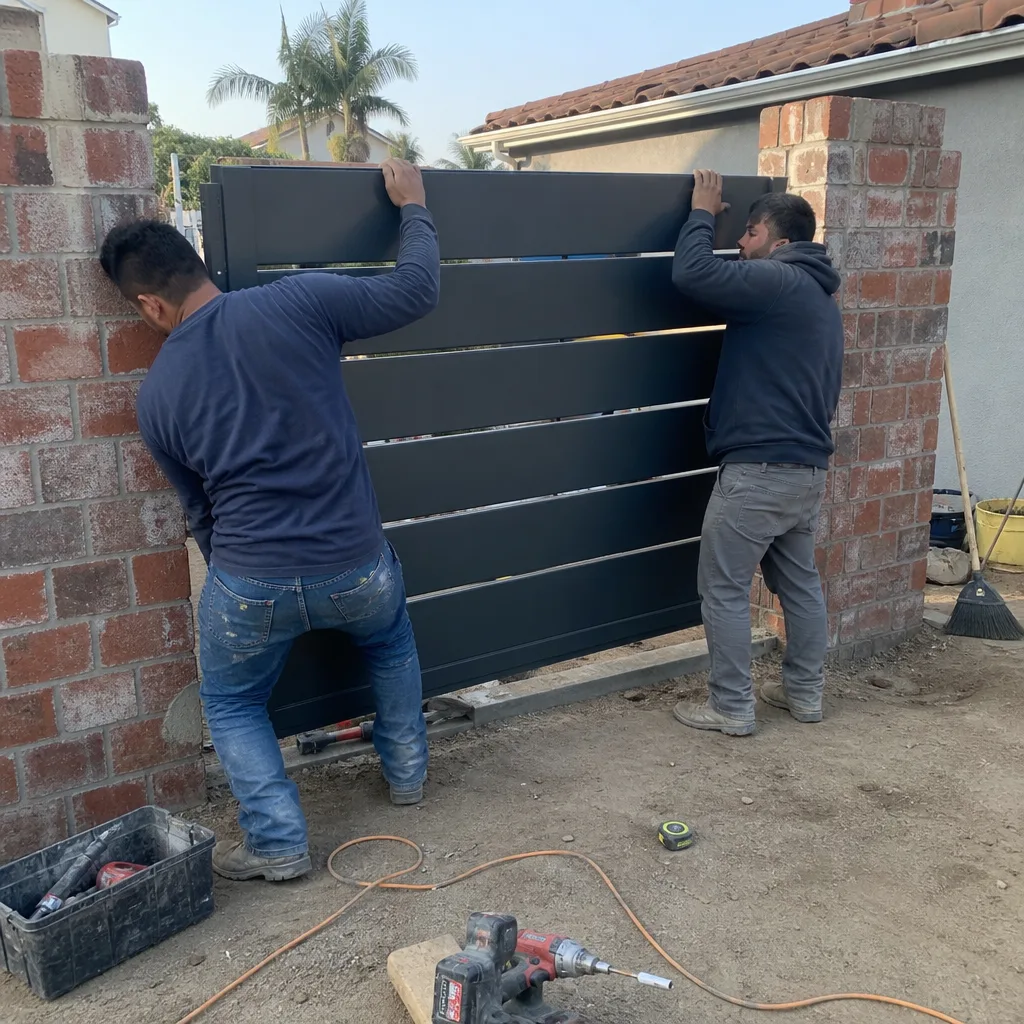
- Assuming a motor swap is always maintenance: Replacing a failed operator with the same model is maintenance. Replacing it with a higher-torque or different-brand model is a modification that may require a permit. We see this mistake weekly on Linear, Viking, and BFT swaps in Huntington Beach.
- Skipping the second entrapment sensor: UL 325 requires two independent forms of entrapment protection. Older gates with a single photo-eye are not compliant, and adding a new operator without adding the second sensor makes the new installation non-compliant too.
- Running unpermitted electrical to a gate: A buried extension cord to a gate motor is a code violation in every California jurisdiction. Huntington Beach inspectors flag this specifically because of the corrosion risk in the coastal salt air.
- Treating gate height as a non-issue: In the Huntington Beach coastal zone, gate height and visual impact are reviewed by the Coastal Commission’s guidelines. A 7-foot solid metal gate may be a code issue in a coastal overlay zone even if it’s fine in a non-coastal neighborhood.
- Trusting verbal assurances from a contractor: “You don’t need a permit for that” is not a legal defense if the work required one. Get it in writing, or verify with the city yourself.
- Ignoring the gate’s force settings after a motor change: A new operator with the force turned up to move a heavy gate can exert enough pressure to injure a child or pet. The force limit must be set and tested during installation, not left at the factory default.
- Selling a home with undocumented gate work: In Huntington Beach’s market, unpermitted automation is a disclosure item that can cost you in escrow. Documenting the work before you list costs a few hundred dollars. Undisclosed, it can cost a sale.
When to Call a Professional
Call a gate professional when the work involves a motor replacement on an older gate, new automation on a manual gate, electrical work of any kind, or any safety system component. These are the jobs where UL 325 compliance and California permit requirements intersect. A trained technician can tell you in the first 15 minutes whether the work is exempt maintenance or permitted modification, and the documentation you get protects you at resale. Vance Gate Repair Huntington Beach offers our Gate Repair services with free estimates in Huntington Beach, and we’ll give you a written determination on whether your project needs a permit before any work starts. Call (657) 271-2877.
Frequently Asked Questions
No, if you’re replacing the motor with the identical model and no electrical or structural changes are involved. Yes, if you’re replacing it with a higher-torque model, a different brand with different force settings, or adding new electrical service to power it. In Huntington Beach, the Building Division can confirm your specific case in a five-minute phone call. Call (657) 271-2877 if you want a written determination on your exact setup.
UL 325 is the national safety standard for automated vehicular gates, requiring two independent entrapment protection systems and limiting gate force to 40 pounds. It applies to every automated gate in California, including gates installed before the current standard took effect. If your gate has only one photo-eye and no safety edge, it’s likely non-compliant. A compliance review costs less than the liability exposure of ignoring it.
No. Adding automation to a manual gate changes it from a non-regulated fence component to a UL 325 regulated life-safety device, and it requires an electrical permit for the new circuit. This is one of the most common permit triggers we see in Huntington Beach, and it’s the one homeowners most often discover after the work is done.
Permit fees in Huntington Beach vary by project scope. An electrical permit for a new gate circuit typically runs a few hundred dollars, and a full gate installation with structural review runs higher. The exact figure depends on the valuation of the work, and the Building Division can quote it before you apply. Call (657) 271-2877 for a free estimate on the full project including the permit scope.
You’re required to disclose the unpermitted work to the buyer. Failure to disclose can create post-sale liability. A documented, code-compliant gate with a retroactive permit or a compliance review is a selling point. An undocumented, non-compliant gate is a negotiation lever for the buyer.
Only if the new operator has different force or speed characteristics than the one it replaces. A same-model FAAC board swap is maintenance. A FAAC-to-BFT conversion changes the safety system’s operating profile and should be reviewed for UL 325 compliance and possible permit requirements. We service both brands and document the compliance status on every job.
The Bottom Line
California gate permitting boils down to one question: does the work restore the gate to its approved condition, or change it? Maintenance is exempt. Modification is not. The most expensive gate problems in Huntington Beach aren’t the ones that break, they’re the ones that were never documented and never brought up to current UL 325. The fix is almost always less expensive than the liability it prevents. Know what you have, know what the work changes, and get it in writing. For How to Hire a Gate Repair Contractor in Huntington Beach: A Step-by-Step Guide, or if you’re not sure where your gate falls, call (657) 271-2877 and we’ll tell you before anyone touches a tool.
Written by Adrian Vance, Owner at Vance Gate Repair Huntington Beach, serving Huntington Beach since 2014.