
Last updated September 20, 2026
Free on-site gate assessment - hinges, posts, and your LiftMaster or Nice gate operator checked before anything is quoted
The assessment is free and the quote is the invoice.
 Before
 After
After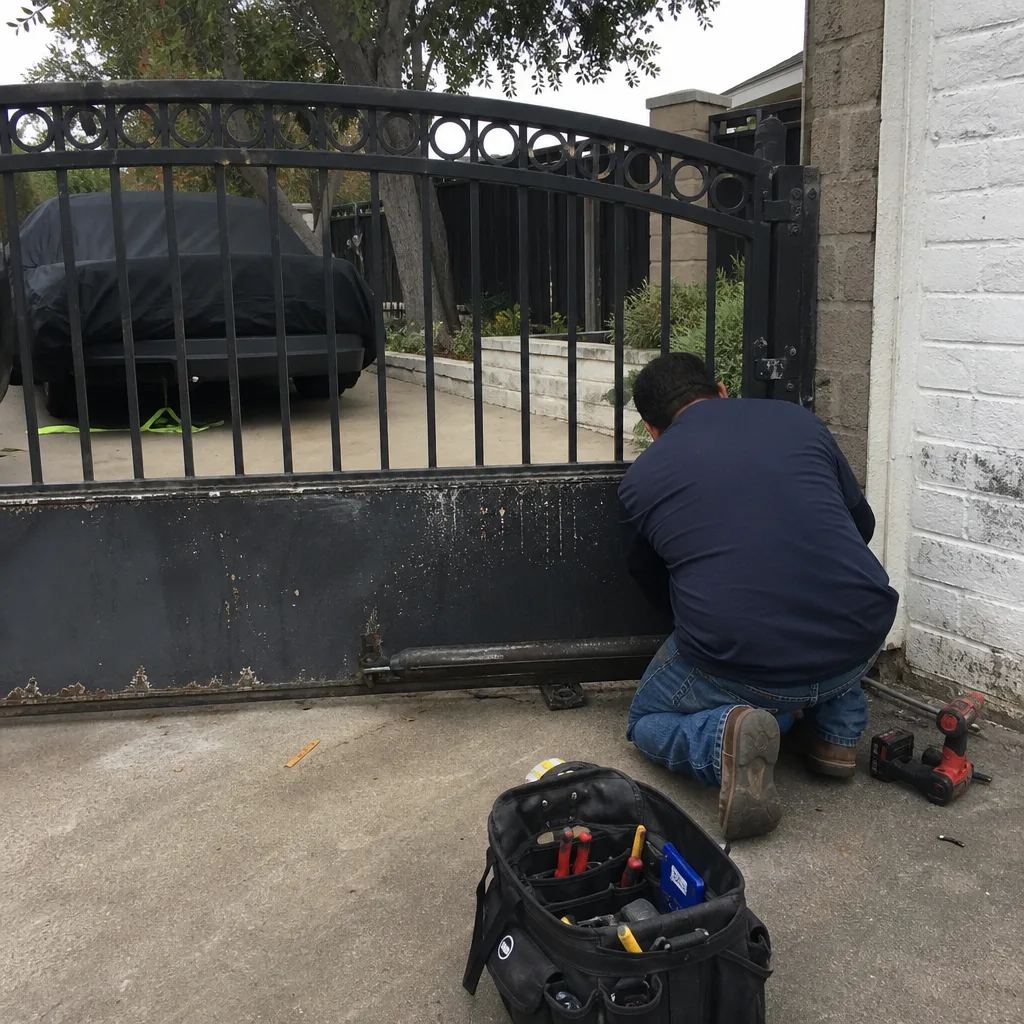 Before
 After
After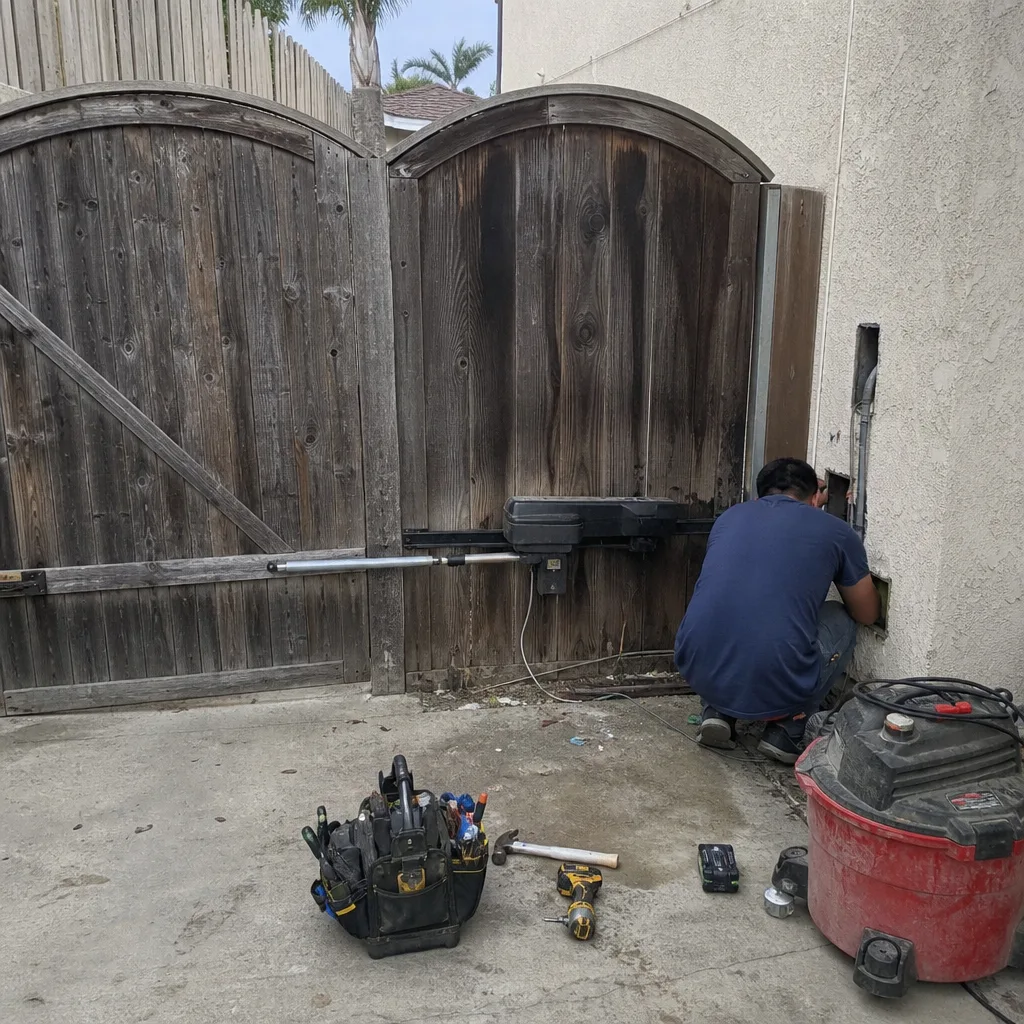 Before
 After
AfterGate Repair Cost Breakdown: The Huntington Beach Homeowner’s Reference for 2026
The $95 service call fee feels like a fair diagnostic charge until you realize what it bought: a verbal opinion. No wiring diagram. No limit-switch reading log. No photo of the control board before and after. Nothing you can hand to the next technician if this repair doesn’t hold. That’s the quiet problem with our Gate Repair services pricing in Huntington Beach, and it’s why two homeowners with the same broken swing gate can pay $280 and $1,900 for what sounds like the same job. This guide makes the cost structure legible. You’ll learn what each component actually costs in 2026, what labor tier accompanies it, how coastal conditions change the math, and how to read a quote line by line so you’re not paying twice to rediscover the same problem.
Quick Answer
Gate repair in Huntington Beach costs between $180 and $2,800 in 2026, with most residential repairs landing between $350 and $900. A simple hinge replacement or photo-eye realignment runs $180 to $450, while a full operator replacement with control board and wiring runs $1,200 to $2,800 depending on the motor brand and whether the arm bracket is intact. The single most important variable isn’t the part, it’s whether the quote is itemized in writing before work starts, because undocumented labor and vague “hardware” line items are where pricing becomes unmanageable. For Gate Repair Maintenance Checklist for Huntington Beach Homeowners, see our detailed guide.
Table of Contents
- Gate Operator Replacement: What Motors Actually Cost in 2026
- Control Boards, Loop Detectors, and the Electronics You’re Actually Paying For
- Hinges, Rollers, and Welding: The Mechanical Layer
- What a Diagnostic Fee Should and Shouldn’t Include
- Coastal Conditions and Cost Per Year: What Salt Air Does to Gate Parts
- The Hidden Cost of Undocumented Repairs
- How to Read a Gate Repair Quote Line by Line
- Common Mistakes to Avoid
- When to Call a Professional
- Frequently Asked Questions
 Before
 After
AfterGate Operator Replacement: What Motors Actually Cost in 2026
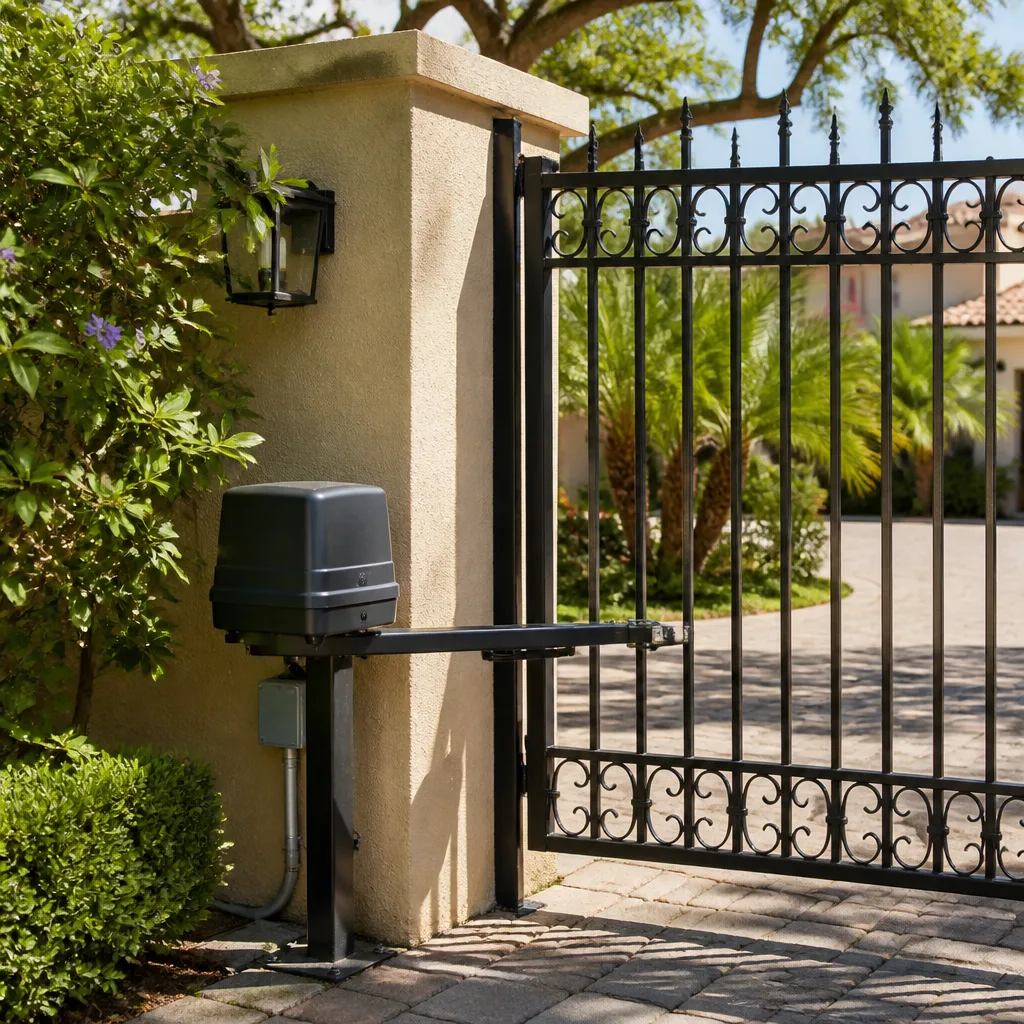
Most Huntington Beach homes run either a swing gate operator or a slide gate operator. The motor itself is the single largest line item on any repair quote, and the 2026 price spread is wider than most homeowners expect. A basic residential swing arm operator from Ghost Controls runs $800 to $1,100 installed. A mid-tier BFT or Linear swing operator runs $1,100 to $1,600 installed, and that’s where most Huntington Beach gates land. A higher-end FAAC or Viking slide operator runs $1,600 to $2,600 installed, with the higher end reflecting heavier gates, faster open speeds, or integrated battery backup.
Here’s the component-level breakdown we work from in our own quotes, itemized the way a written quote should look:
- Swing arm operator (Ghost Controls, residential): $450-$650 for the unit, $350-$450 labor
- Swing arm operator (Linear or BFT, mid-tier): $650-$950 for the unit, $350-$500 labor
- Slide operator (FAAC or Viking, residential): $900-$1,600 for the unit, $400-$700 labor
- Control board replacement (any brand): $180-$450 for the board, $120-$250 labor
- Loop detector (replacement or add-on): $150-$350 for the detector, $150-$300 labor
- Photo-eye set (both sides): $80-$180 for parts, $100-$200 labor
- Remote/keypad sync and programming: $50-$120 flat
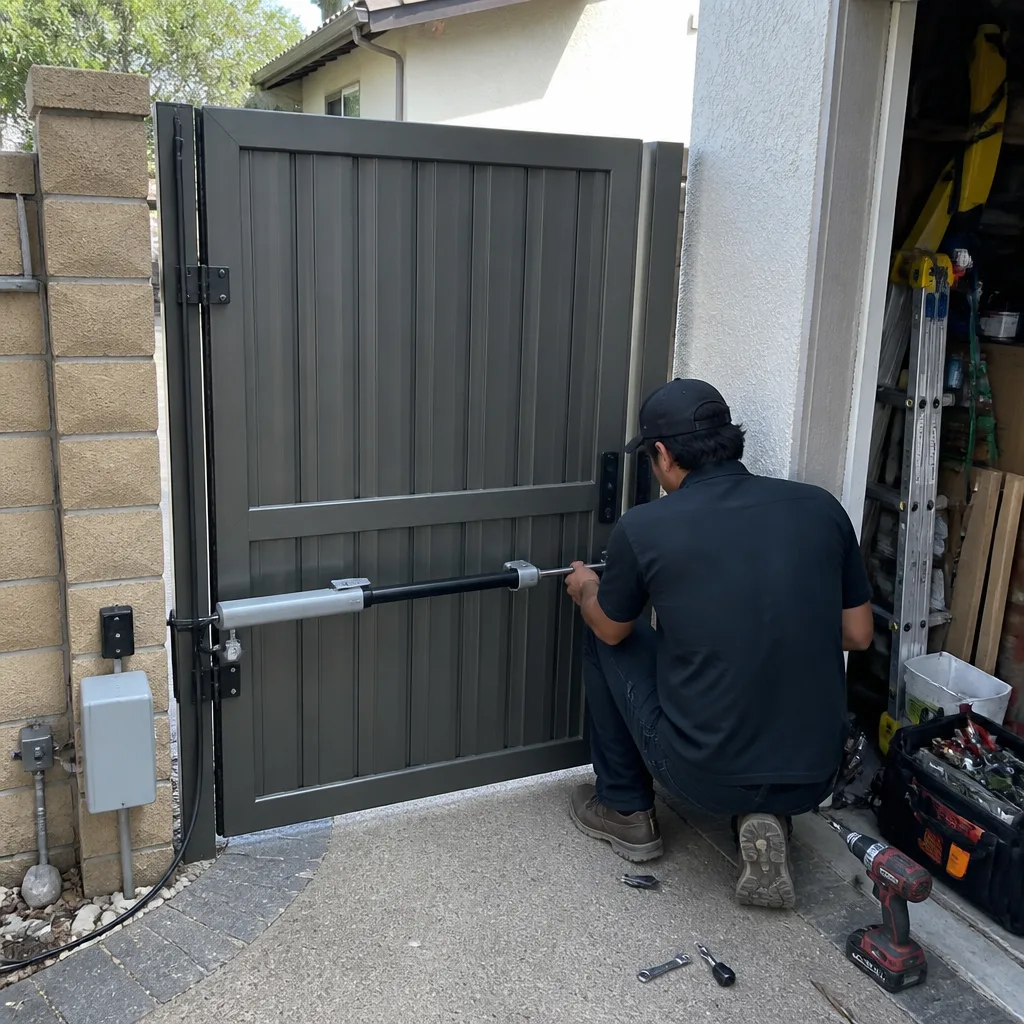
Labor isn’t a mystery surcharge. The technician has to verify the operator’s travel limits, adjust force settings, align the photo-eyes, and confirm the gate’s obstruction reverse works after installation. On a swing gate, the arm bracket often needs to be removed, repositioned, and re-welded if the old operator pulled out of the post. That’s an additional $150 to $350, but it’s a separate line item so you can see exactly what you’re paying for. We service all nine major automation brands, which means the quote reflects the motor already on your property, not a forced replacement of a perfectly good one.
Control Boards, Loop Detectors, and the Electronics You’re Actually Paying For
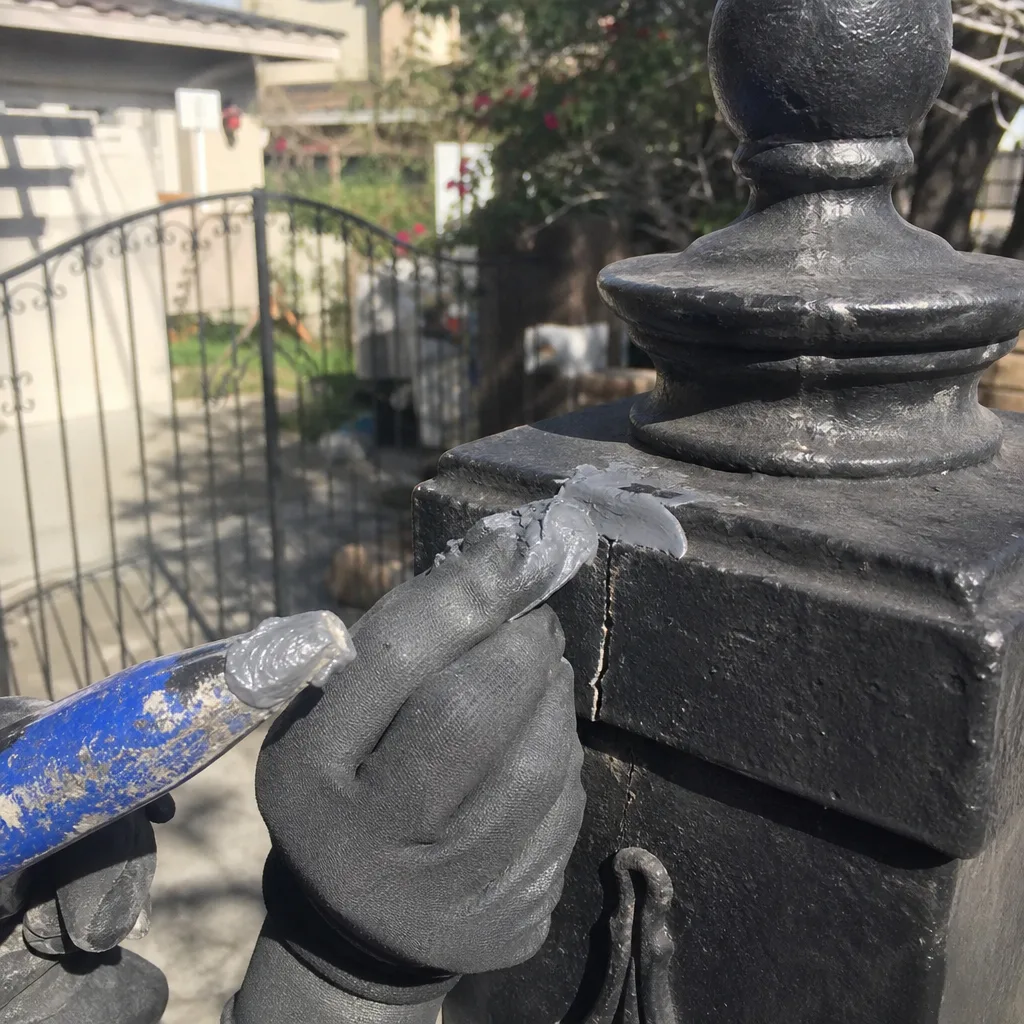
When a Huntington Beach gate won’t respond to the remote, homeowners assume the remote died. Just as often, the control board has failed, and that distinction is worth roughly $300. A control board is the circuit card inside the operator that receives signals from remotes, keypads, photo-eyes, and loop detectors, then tells the motor what to do. When it fails, you get symptoms that look like a battery problem: intermittent operation, gate opening but not closing, or no response at all.
Board replacements follow a pattern:
- Identify the board and confirm failure. A technician removes the operator cover and checks for visible damage: burnt traces, swollen capacitors, corroded terminals. This takes 15 minutes and should be photographed regardless of whether you proceed with the repair.
- Check the power supply first. A board that’s receiving 28 volts when it expects 24 will fail early and often. We log the voltage reading before replacing anything.
- Replace the board and re-set all parameters. Travel limits, force settings, auto-close delays, and all remote codes must be reprogrammed. This is where undocumented repairs go wrong: if the settings aren’t recorded, the next technician starts over from scratch.
- Test the complete system under load. The gate should open, reverse on obstruction, and stop at the same limit positions three times consecutively.
Loop detectors deserve their own explanation because they’re the most misunderstood line item on a Huntington Beach repair quote. A loop detector is the device that senses a vehicle sitting over a loop of wire buried in the driveway, which tells the gate to stay open rather than closing on the car. When a loop detector fails, the gate may close unpredictably or refuse to stay open. Replacement is straightforward, but the labor depends on whether the buried loop wire is still intact. If the wire is broken, the driveway loop itself must be re-cut and re-sealed, adding $300 to $600. A written quote should distinguish between the detector replacement and the loop repair, because they’re separate jobs with separate failure modes.
Hinges, Rollers, and Welding: The Mechanical Layer
The part of a gate that gets the least attention is the part that fails most predictably: the hardware. Hinges, rollers, and the post they attach to carry the entire weight of the gate through thousands of cycles per year. In Huntington Beach, salt air accelerates rust on uncoated steel hardware, which is why we routinely see hinge failures within three to five years of installation on coastal properties within a mile of Pacific Coast Highway.
Expect these ranges for mechanical repairs in 2026:
- Hinge replacement (pair, standard steel): $150-$300 including hardware and labor
- Hinge replacement (pair, stainless or powder-coated marine grade): $300-$550
- Roller replacement (single slide gate roller): $80-$180 per roller
- Track repair or realignment: $200-$450
- Post straightening or reinforcement: $250-$600
- Weld repair (cracked joint, broken picket): $100-$250 per weld point, with a typical service minimum of $150
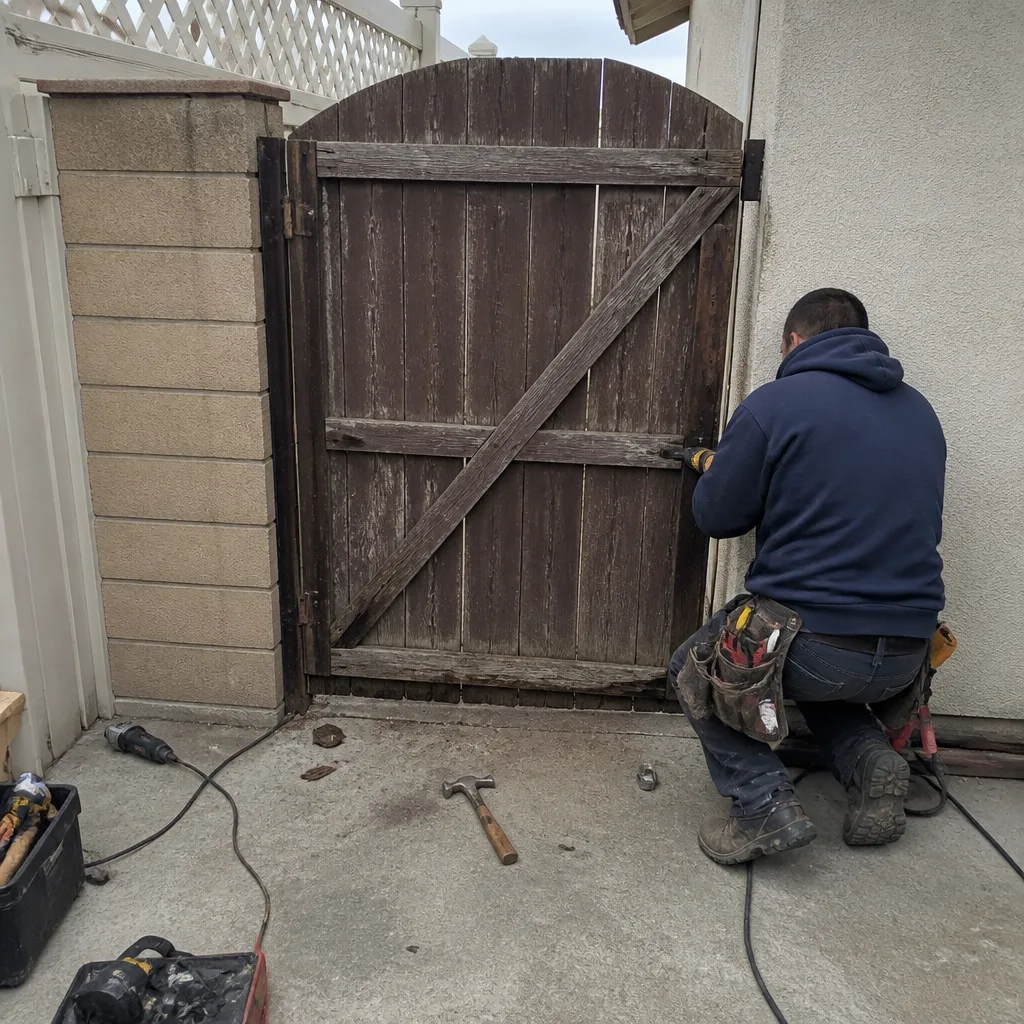
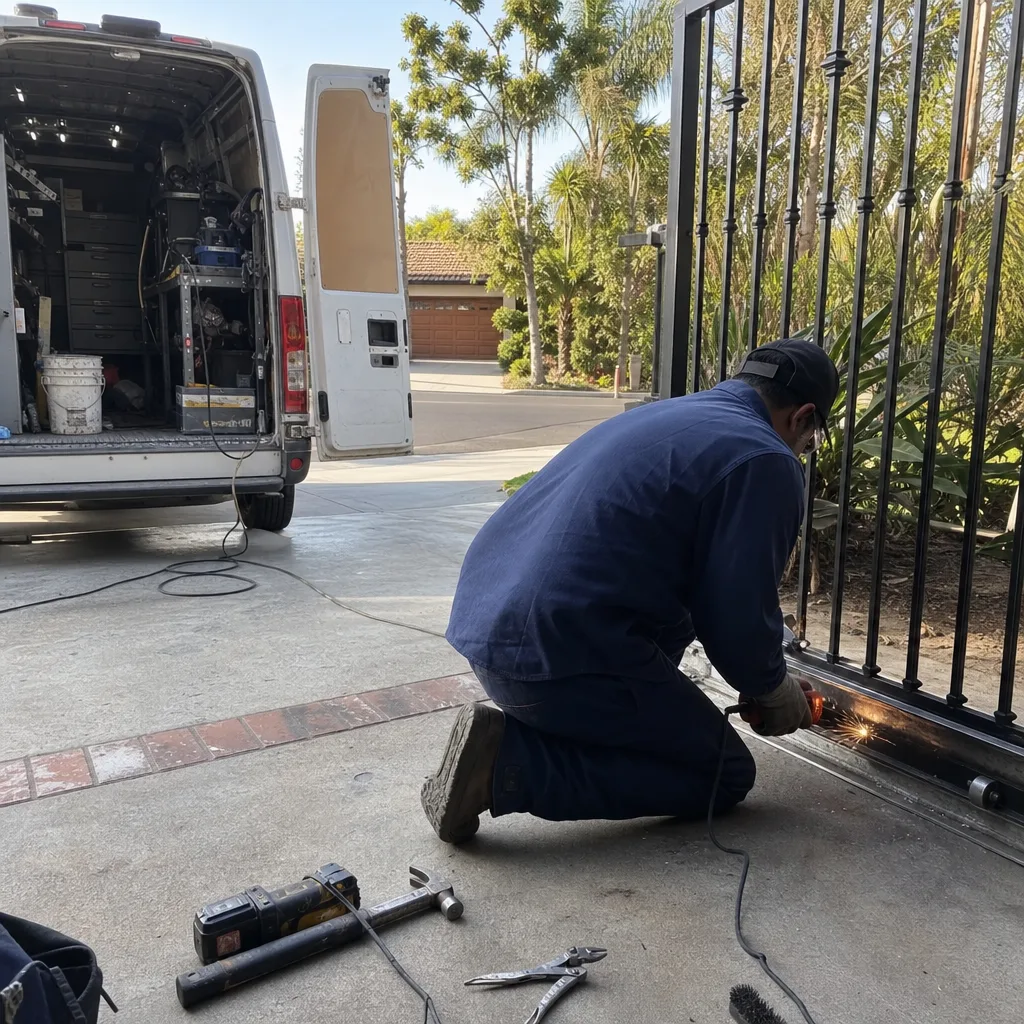
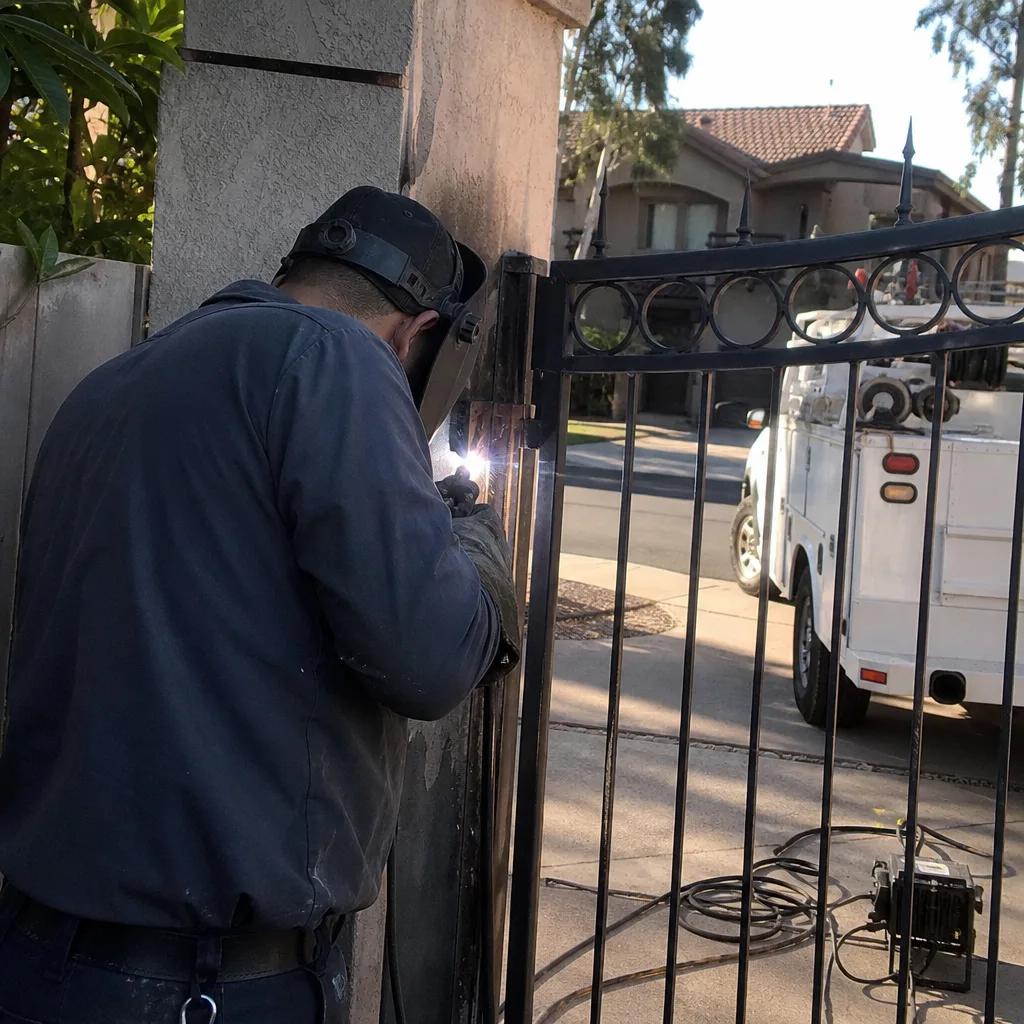
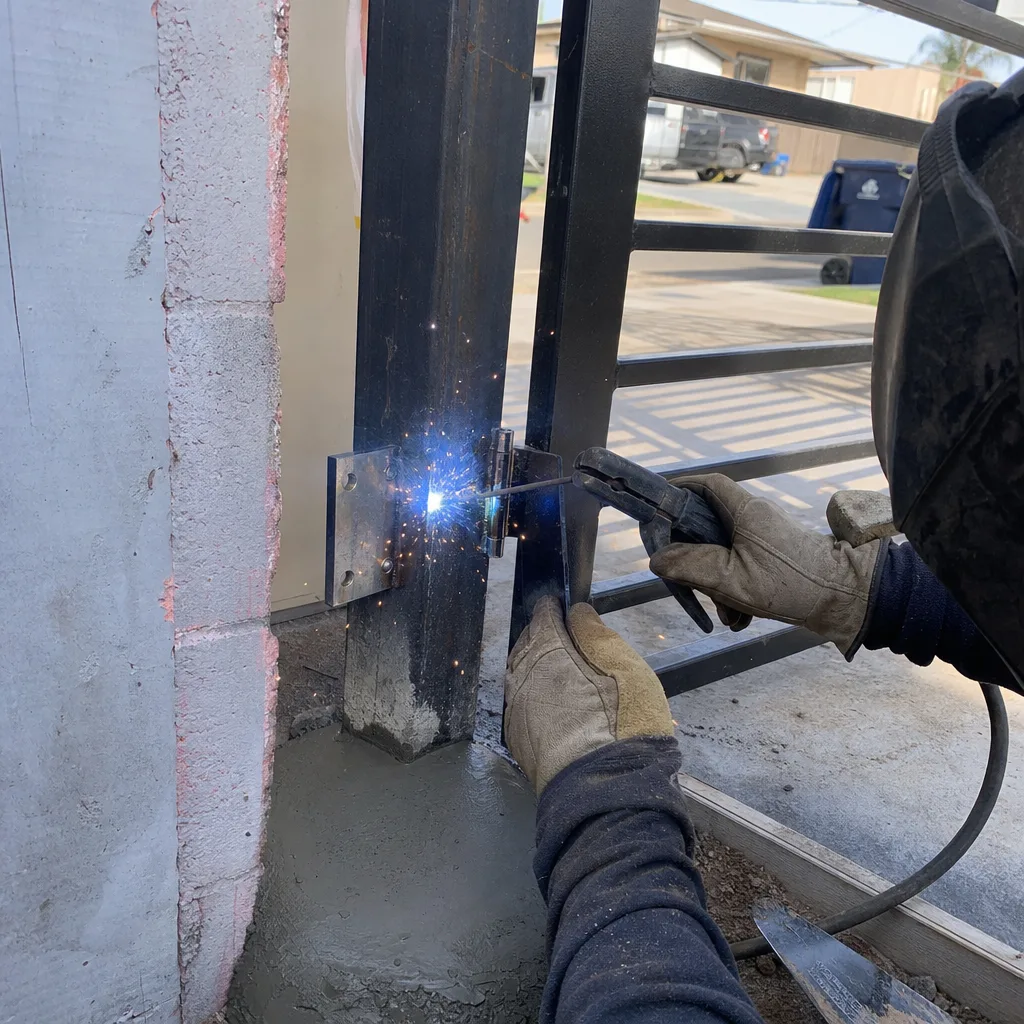
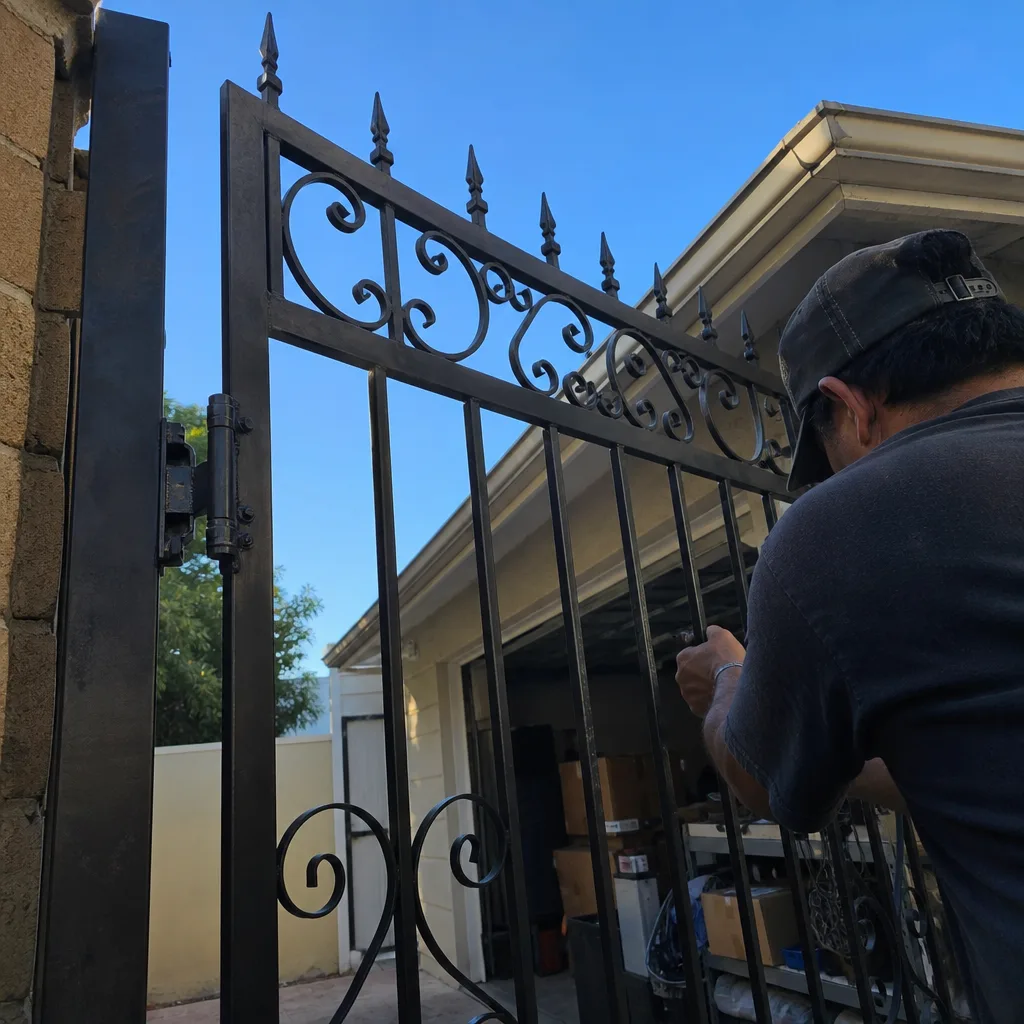
Welding is a separate skill from gate automation, and not every gate company sends a technician who can do both. When a weld fails on a swing gate, the operator is now lifting or dragging a gate that isn’t structurally sound, which means the operator and the new weld fail together eventually. We do the welding and the automation in the same visit, which saves the homeowner from coordinating two trades and two invoices. The documentation matters here too: a photo of the finished weld with the grinding and paint work visible gives you a record of what was actually done, not just a line item that says “welding.”
What a Diagnostic Fee Should and Shouldn’t Include
A diagnostic fee in Huntington Beach typically runs $65 to $120. The question isn’t whether that fee is reasonable. The question is what it produces. A diagnostic visit should end with a written finding: what was tested, what readings were taken, what failed, and what the repair will cost. If it ends with a verbal opinion and a “we’ll send you a quote,” you’ve paid for a sales visit, not a diagnosis.
Here’s what we document on every diagnostic visit, and what you should ask for from any gate company:
- A written diagnosis. Not a text message. A physical record that names the part that failed and the readings that confirmed it.
- Photographs. The failed component, the control board as it was found, and any measurements taken. Under the Haven Standard, this photo record is left with the homeowner and filed in the job record, at no additional charge.
- A written price before any repair work starts. The flat price covers the repair, and it’s handed over before any tool is picked up. If the technician finds more, you approve the additional work before it starts, not after it’s done.
- The part number. You should see the exact part number being installed, not “replacement board” without a brand or model.
The diagnostic fee at Vance Gate Repair is structured the same way as every other charge: it’s written, itemized, and applied to the repair if you proceed. The point isn’t that our fee is different. The point is that a diagnostic that produces documentation is worth more than one that produces a recommendation, because documentation is transferable. A homeowner who has a photo log and a written diagnosis can get a meaningful second opinion from another company. A homeowner who has a verbal opinion cannot.
We’ve also seen this pattern enough times to name it: a homeowner pays a diagnostic fee, receives a verbal recommendation, declines the repair, calls another company, and pays a second diagnostic fee because the first technician’s findings evaporated the moment the truck left the driveway. The documentation is the difference between paying once for knowledge and paying every time you want to know.
Coastal Conditions and Cost Per Year: What Salt Air Does to Gate Parts
Huntington Beach isn’t one climate. A gate in Edwards Hill or near Seacliff sits in a different environment than a gate in northeast Huntington Beach, and that environment changes the cost equation. Salt air corrodes electrical terminals, degrades wiring insulation, and accelerates rust on exposed steel hardware. The practical effect is that a standard galvanized hinge that might last eight years inland might last four years within half a mile of the coast. That changes the cost-per-year calculation significantly.
Here’s the comparison that matters for Huntington Beach homeowners:
- Standard swing arm operator (non-marine rated): $800-$1,100 installed, expected life 4-6 years near the coast, roughly $200-$275 per year
- Marine-rated or corrosion-resistant operator (BFT or Linear models with sealed enclosures): $1,100-$1,600 installed, expected life 7-9 years near the coast, roughly $150-$230 per year
- Standard steel hinges: $150-$300 installed, expected life 3-5 years near the coast, roughly $60-$100 per year
- Stainless or powder-coated marine hinges: $300-$550 installed, expected life 8-12 years near the coast, roughly $35-$70 per year
The marine-rated option costs more upfront but less per year of service. That’s the calculation most homeowners never see, because most quotes don’t include life expectancy as a line item. A written quote should show the part, the price, and ideally the reason one part was recommended over another. When we recommend a sealed-enclosure operator for a home near the beach, the quote says why: salt air ingress is the most common cause of coastal control board failure we document in Huntington Beach, and the sealed unit is the answer.
But the more urgent point is that coastal conditions make documentation more important, not less. A corroded terminal looks like a failed board if you’re not looking carefully. An undocumented diagnosis of “bad board” might lead to a board replacement when the actual repair was cleaning a corroded terminal block and re-tightening the connection. The photo record is what catches that mistake before it becomes an invoice.
The Hidden Cost of Undocumented Repairs
Every gate has a history. Most of that history lives in the head of whichever technician happened to be dispatched, and when that technician moves to another company or retires, the history is gone. The homeowner now owns a gate with an unknown past: the limit switch was set at some position for some reason, the force setting was adjusted because of a specific obstruction, the photo-eyes were replaced once, the board was swapped twice. None of it is on paper. The next technician will spend time rediscovering all of it, and that time is billable.
This is the hidden cost of undocumented repairs, and it’s substantial in Huntington Beach because gates here fail in patterns. A gate that’s been repaired three times for the same symptom has a chronic problem that a fresh technician can’t see, but a documented history would reveal immediately. We’ve seen homeowners spend $400 to $900 rediscovering problems that a single photo record from the first repair would have made obvious on day one.
The financial structure looks like this:
- First repair (undocumented): $300 for a board replacement, no photo log, no settings record
- Second repair (six months later): $150 diagnostic fee to rediscover the same problem, plus $350 for another repair attempt
- Third repair (one year later): $120 diagnostic fee, at which point the homeowner has now spent $920 on the same underlying issue
The counterfactual is simple to state. If the first repair had included a documented photo record and written settings log, the second technician could see exactly what was replaced, what it was set to, and what was found. The diagnosis might have been made from the record alone. That’s what commercial access-control documentation does, and it’s the habit we brought to residential gates when gate repair in Huntington Beach became our core trade. The price for documentation on every visit is zero additional dollars, and the value compounds every time a gate needs work again.
How to Read a Gate Repair Quote Line by Line
Most gate repair quotes in Huntington Beach are three lines long: parts, labor, total. That’s not a quote, it’s a verdict. Here’s how to read it, and what to ask for if the lines don’t add up.
- “Miscellaneous hardware”: This line should be itemized or removed. Hardware is never miscellaneous; it’s specific. Hinges, brackets, bolts, wire connectors, and sealant each have a part number and a price. A written quote under the Haven Standard names each component. If a quote says “miscellaneous hardware $180,” ask what hardware. If the answer is vague, the line is carrying markup that isn’t being accounted for.
- “Labor adjustment”: Everyone’s schedule slips, but labor adjustment on a repair quote is different from labor adjustment on a construction quote. On a gate repair, the labor should be a flat number that covers the repair from start to finish. If the quote shows a labor adjustment on top of a labor fee, the quote is being delivered with built-in uncertainty. That’s the opposite of a written price.
- “Diagnostic fee applied”: This is a normal practice and not a red flag. But it should be applied against the written repair price, not just mentioned as a courtesy. If the diagnostic fee is $95 and the repair is $550, the invoice should show a $95 credit, and the final number should be $455 plus any parts that weren’t part of the original diagnosis.
- Brand names on parts: A quote that says “control board” without a brand is impossible to verify. The part number should be on the quote, not just on the invoice after the work is done. If a company resists naming the part before the job starts, that’s a signal the part may not exist yet, which means the technician will source it afterward and the price may move.
- Warranty terms on the line items: The quote should state what’s covered and for how long, and that’s part of the written agreement. The 365-Day Done Right Promise covers everything we complete for one full year: if the repair isn’t right, it’s made right, no argument, no fee, no expiration date inside that year.
You should walk away from any quote that can’t answer these questions.
Common Mistakes to Avoid
- Accepting a verbal quote that was never written down. A verbal price is what gets remembered differently by each party. The written quote is a record. If you don’t have it in writing before work starts, you don’t have a price, you have a conversation. Under Clause 1 of the Haven Standard, the flat price is handed over before any tool is picked up, and that’s the only way pricing remains honest.
- Replacing a motor when the problem is the limit switch. This is the most expensive misdiagnosis in residential gate work. A limit switch failure presents as a gate that opens partway, then stops, or reverses at the wrong point. A homeowner hears “motor problem” and gets quoted a $1,400 replacement when the actual repair is a $120 limit switch adjustment. Ask what the technician measured before accepting a motor replacement recommendation.
- Ignoring the gate’s physical condition while focusing on the automation. The operator is attached to a gate that sags on worn hinges or drags on failing rollers. The electronics fail because the mechanics failed first. We’ve seen homeowners invest in new operators while the underlying gate was pulling the old mounting brackets out of the post. The operator and the gate are one system, and a quote should explain that relationship.
- Paying for the same diagnosis twice. If the first technician didn’t leave documentation, the second technician can’t use anything from the first visit. Before paying for a second opinion on a complex problem, confirm the first diagnosis was recorded in writing, with photos and readings. If it wasn’t, the second opinion is actually a first diagnosis, and you’re paying for the same knowledge twice.
- Failing to ask about coastal-specific component selection. A standard operator installed within a mile of the Huntington Beach coastline is likely to fail earlier than a marine-rated unit. The cost difference is upfront dollars, but the cost-per-year calculation favors the coastal-rated choice in nearly every coastal neighborhood we work in. Ask why the quote recommends the part it does.
- Accepting a quote that doesn’t include the wiring. Gate repair isn’t only the visible parts. Wiring runs, junction boxes, and connections are where coastal corrosion does its worst work. If the quote mentions the operator and the hardware but not the wiring, ask what will be done with the existing wiring and whether the conduit is still sealed. Water ingress into conduit is a slow failure that produces intermittent problems for years.
When to Call a Professional
Some gate problems are obvious and some are disguised. A gate that’s moving slowly might be a worn capacitor or a dying motor, but it might also be a dragging hinge that’s overloading a perfectly good operator. A gate that reverses unexpectedly might be a misaligned photo-eye or a loop detector that’s failing intermittently. None of these are safe for a homeowner to open up and probe; gate operators run on household line voltage, and the capacitor inside stores charge even after the breaker is off. If the gate is making a grinding sound, moving erratically, or failing to reverse when obstructed, call a professional. The safety systems on a gate are what keep a child or pet from being caught in the path, and a gate with a failed obstruction sensor is genuinely dangerous. Vance Gate Repair Huntington Beach offers free estimates in Huntington Beach, and a live person answers the phone 24/7. For Gate Repair Permits, Codes & Inspections in CA: What You Need to Know, check our compliance guide. at (657) 271-2877. The call will give you a written price before any work starts, the same standard we’ve applied to every job since 2014.
Frequently Asked Questions
Most gate repairs in Huntington Beach cost between $180 and $900 in 2026, with full operator replacements running $1,200 to $2,800. The most common repairs, such as photo-eye realignment, hinge replacement, and remote programming, fall in the $180 to $450 range. Call (657) 271-2877 for a written, itemized quote on your specific gate and the problem you’re seeing.
A diagnostic fee should include a written diagnosis, photographs of the findings, and a specific repair price in writing before any work begins. If the fee only produces a verbal recommendation, you’ve paid for a sales visit, not a diagnosis. Vance Gate Repair documents every visit, leaves the photo record with the homeowner, and files it in the job record under Haven Standard Clause 4.
Standard gate motors last 4 to 6 years within a mile of the coast, while marine-rated or sealed-enclosure models from brands like BFT or Linear typically last 7 to 9 years. The salt air in coastal Huntington Beach neighborhoods like Seacliff and Edwards Hill corrodes terminals and wiring, which shortens the life of unprotected electronics. The right component choice depends on your home’s specific distance from the coast and the existing gate structure.
Yes, most gate repairs are same-day jobs once the diagnosis is complete. Hinge replacement, photo-eye alignment, remote programming, and many board replacements can be completed in a single visit. A live person answers our phone 24/7, and the technician arrives with the parts and the written price already prepared.
A gate repair quote should itemize the parts by brand and part number, the labor as a flat rate, and the diagnostic fee applied as a credit if the repair proceeds. It should also state the warranty terms and note whether the existing wiring and conduit were evaluated. Any quote that relies on “miscellaneous hardware” or “labor adjustment” categories is not fully itemized and should be revised before you approve it.
A recurring gate problem often means the underlying cause wasn’t documented the first time, so each new technician rediscovers the same issue from zero. Without a written settings log and photo record from the previous repair, the chronic failure pattern is invisible. The documentary record is what lets a technician identify the pattern instead of treating each recurrence as a new problem, and it’s included on every visit to Vance Gate Repair Huntington Beach home service calls, at no additional charge.
The Bottom Line
Gate repair pricing in Huntington Beach stops being opaque the moment you demand itemization. The components have known costs, the labor is predictable, and the coastal conditions are measurable. What separates a $950 repair from a $1,900 repair isn’t usually the problem; it’s whether the quote bundles everything into a single number or shows you exactly what you’re paying for. Homeowners who get written prices, photo records, and named parts pay less over the life of the gate because they’re not rediscovering documented problems or paying twice for the same diagnosis. When your gate needs work, get it in writing. Call (657) 271-2877 for a free estimate, and see what a documented quote looks like before you agree to anything.
Written by Adrian Vance, Owner at Vance Gate Repair Huntington Beach, serving Huntington Beach since 2014.